

Overview
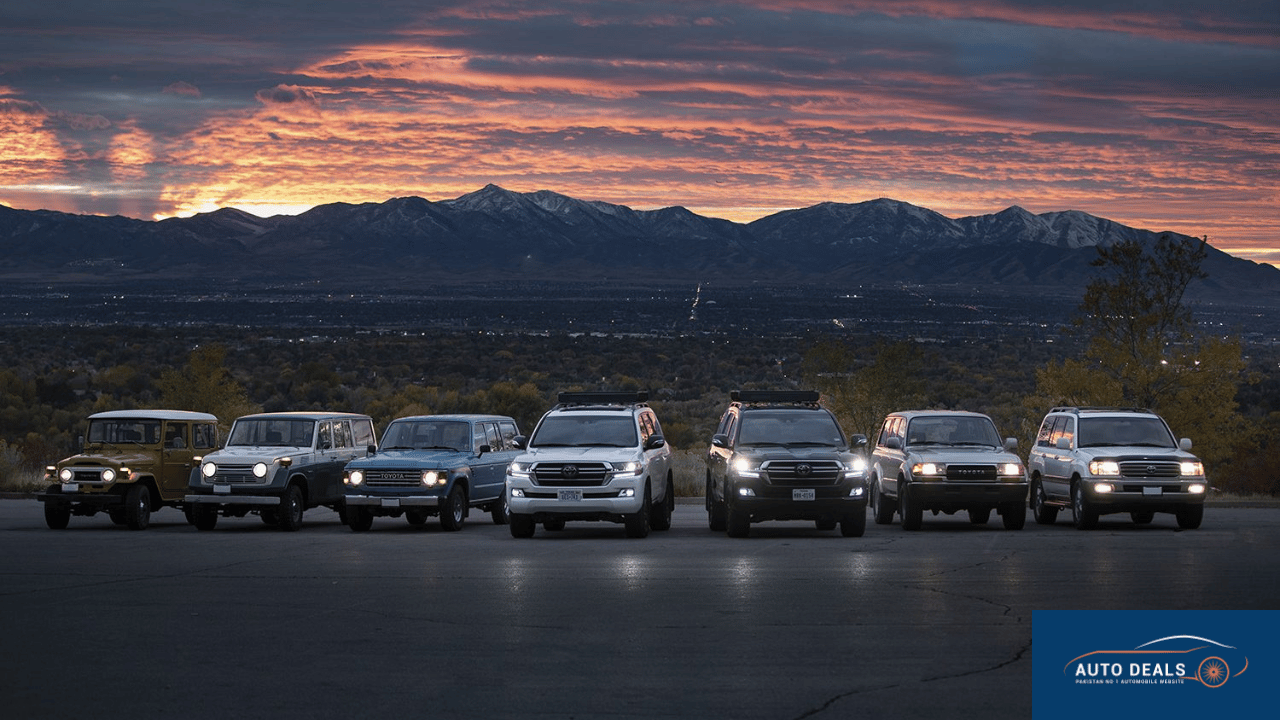
One of the common brands is TOYOTA LAND CRUISER. Customizing automobiles is a common method for car enthusiasts to have fun, thus their interests tend to be in cars of this type.
Many automobile manufacturers, however, rely on sales of utility vehicles dedicated to working people rather than sports cars for fickle maniacs. Utility vehicles, especially in the most remote parts of the planet, are almost definitely sharing the destiny of passengers.
As a result, only automobiles with high dependability based on rigorously assessed and acknowledged performance may thrive in such markets.
Founder of Toyota and His Land Cruiser Plan
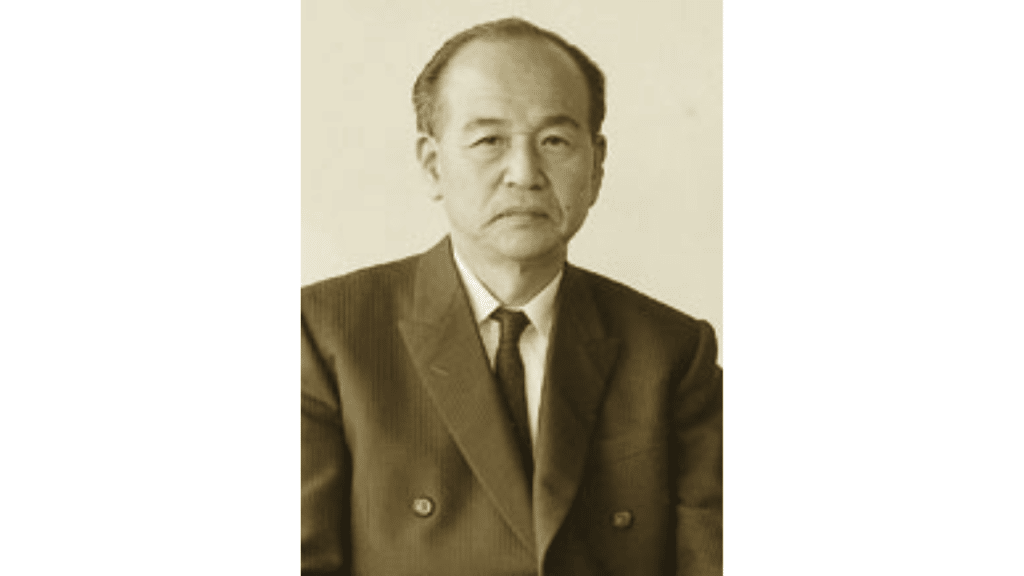
The founder of TOYOTA, “Kiichiro Toyoda”, planned to make passenger automobiles, but trucks provided a stable base for his business.

Following CHEVROLET, TOYOTA created the truck with nearly the same systems as a passenger vehicle. During the conflict, TOYOTA earned management and technical abilities by selling vehicles to private distributors and militaries.
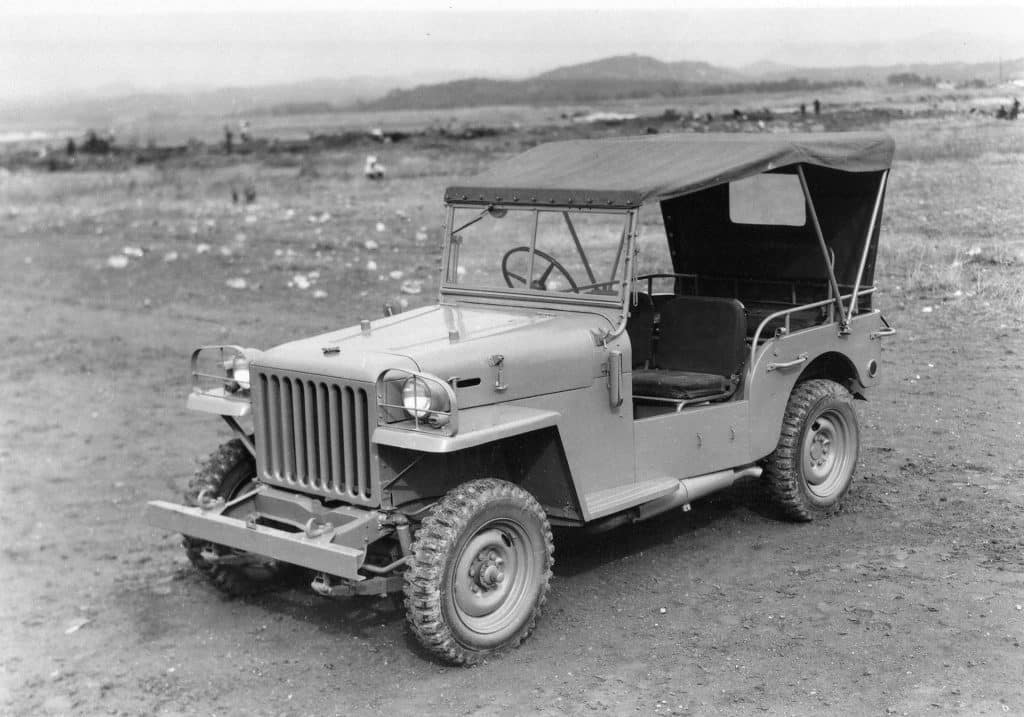
At the conclusion of the Pacific War, TOYOTA even managed the construction of a prototype 4WD military vehicle, referring to the US military jeep spoiled by the Japanese forces in Southeast Asia.
Toyota Prepared Business Jeep
TOYOTA designed ‘the all-around automobile’ for the competition using lessons learned during the construction of 4WD prototypes during the war.
They are, however, beaten by MITSUBISHI, who manufactures the JEEP, the authorized production of WILLIS OVERLAND.
TOYOTA, which never passes up an opportunity to make a good sale, began selling its ‘all-around automobile’ to forest industries as well as police stations, fire departments, and post offices located in mountain locations. The name of this vehicle was BUSINESS “JEEP,” which was taken from a JEEP for work.
Toyota Land Cruiser History and Generations
- 1st Generation Land Cruiser BJ series
- 2nd Generation Land Cruiser 20 Series
- 3rd Generation Land Cruiser 40 series
- 4th Generation Land Cruiser 70 series
- 5th Generation Land Cruiser 80 Series
- 6th Generation Land Cruiser 100 Series
- 7th Generation Land Cruiser 200 Series
- 7th Generation (J200) Facelift
- LC300 (2021)
1st Generation Land Cruiser BJ Series
In January 1951, Toyota created the “Jeep” BJ prototype. This resulted from a desire for military-type utility vehicles, similar to the 1948 British Land Rover Series 1.
Toyota test driver Ichiro Taira drove the next-generation Jeep BJ prototype up to Mount Fuji’s sixth stage in July 1951, making it the first vehicle to do so.
The National Police Agency was in charge of the test (NPA). The NPA was so impressed by this performance that they promptly ordered 289 of these off-road vehicles, designating the Jeep BJ as their official police car.
However, regular manufacture of the “Toyota Jeep BJ” at the Toyota Honsya Plant began in 1953. (Rolling chassis assembly).

Land Cruiser Name Discover
Hanji Umehara, the technical director, invented the term “Land Cruiser” in June 1954. “Land Rover was another rival in England. I needed to come up with a name for our automobile that sounded as respectable as that of our competitors. That is why I chose the name ‘Land Cruiser.’ The meaning of the name is “the cruiser on land”.
“He remembers. The term was previously used on the Studebaker Land Cruiser, which was manufactured from 1934 until 1954.
2nd Generation Land Cruiser 20 Series
The so-called 20 Series Land Cruiser, the second generation was introduced in November 1955, with the outward look adequately altered for civilian usage.

To meet a wide range of demands, two chassis with wheelbases of 2,285 mm and 2,430 mm were initially available, with a 2,650 mm wheelbase.
Chassis was added at the conclusion of the model life in 1959. There were two inline 6-cylinder gasoline engines available: a 3.4-liter unit (Type B) carried over from the first-generation model and a 3.9-liter one (Type F) utilized on a fire engine variant at the conclusion of the first model generation. By mid-1956, the engine lineup had been reduced to just the Type F unit.
Due to harsh criticism of its performance, CROWN withdrew from the market. The LAND CRUISER, on the other hand, was generally accepted due to its high durability and run-through performance that met military-level requirements, and it helped TOYOTA break into the North American market.
The Land Cruiser began to be exported in large quantities to North America and other international markets with the second-generation model.
3rd Generation Land Cruiser 40 series
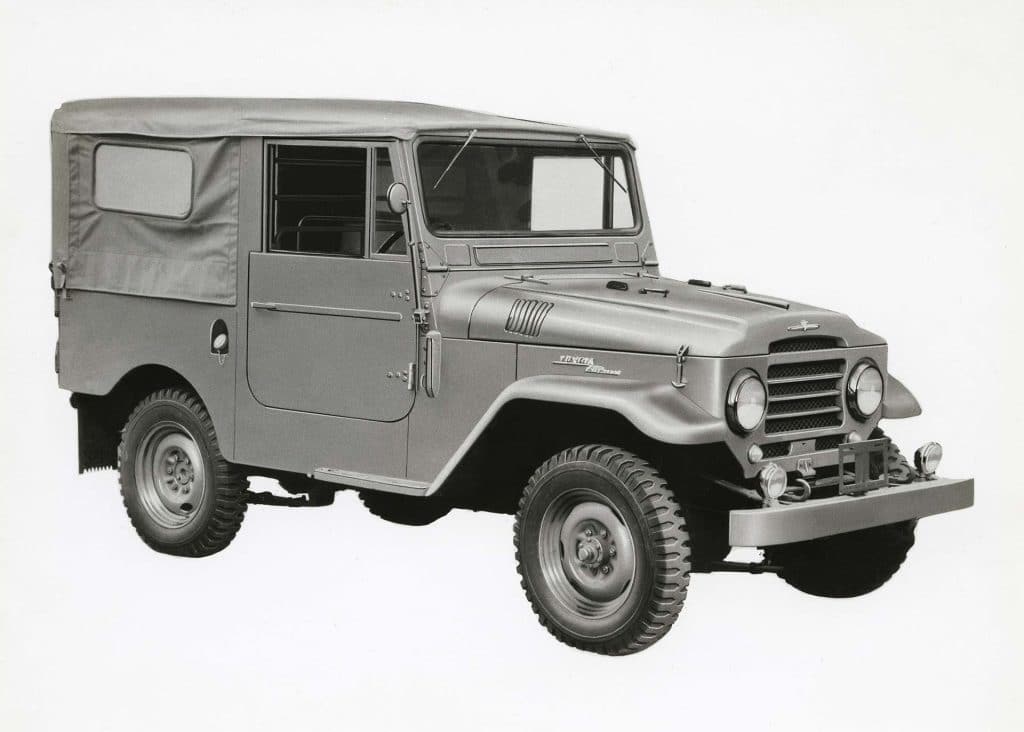
The third-generation Land Cruiser, known colloquially as the 40 Series, hit the market in August 1960. The vehicle received widespread appreciation as a dependable cross-country vehicle, establishing the brand worldwide.
The basic body modifications were identical to the second-generation model, including a soft-top, 2- and 4-door vans, a truck, and a fire engine.
The 4-door van was superseded in July 1967 by a newly developed station wagon with a specialized body (FJ55). In 1973, a 3.6-liter 6-cylinder diesel power unit (Type H) was introduced to the engine selection, and in 1974, a 3-liter 4-cylinder diesel (Type B) was added.
Because the diesel versions were categorized as “4 number” (small trucks), which provided financial benefits to individual owners, these power units became the Land Cruiser’s engine of choice. A 3-speed manual gearbox with a column shifter and a 2-speed transfer case operated from the dashboard was used.
The third-generation model was adored for up to 24 years over the world, earning it the moniker “40 (forty).”
4th Generation Land Cruiser 70 series
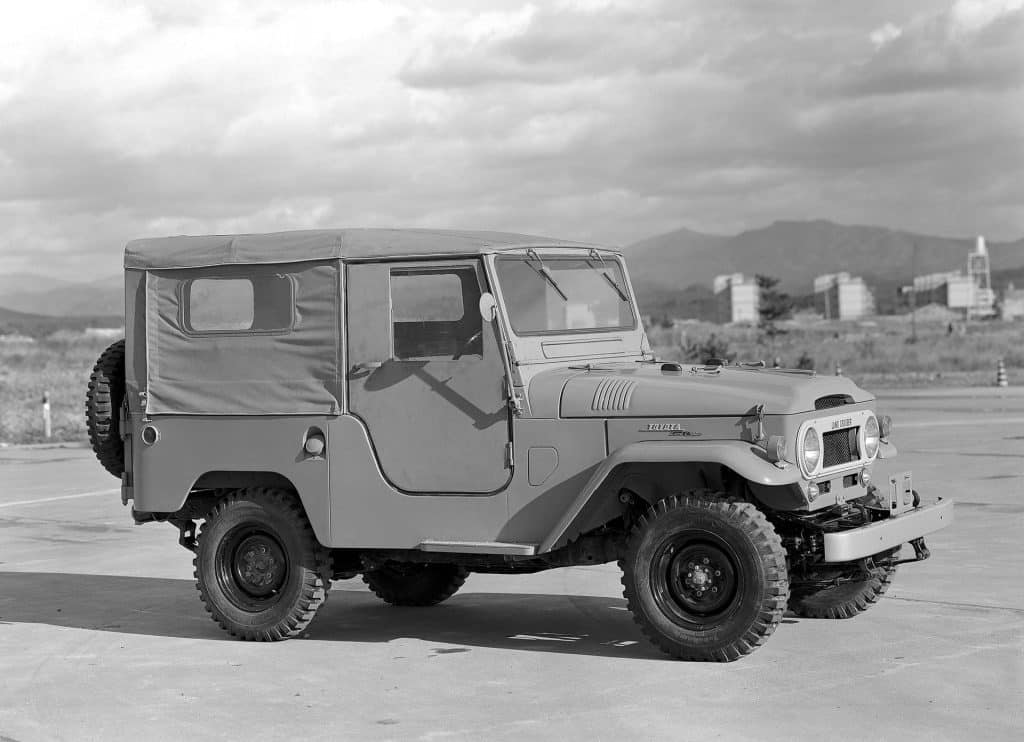
The Land Cruiser 70 Series, the 40 Series replacement, was introduced in November 1984. As four-wheel-drive vehicles became more popular for passenger travel as well as their original purpose as commercial vehicles.
The Land Cruiser refreshed its exterior style and enhanced its ride comfort, drivability, and ease of use to meet new demand. The redesigned style kept the 40 Series’ general appearance while using curved glass for the windscreen. The cabin grew larger, and its usability was improved.
To increase ride comfort, the rigid axle front suspension’s leaf springs were replaced with coil springs in 1999. The engine selection includes 4-, 5-, and 6-cylinder engines for both gasoline and diesel vehicles, as well as a 4.5-liter V8 diesel power plant for export models.
5th Generation Land Cruiser 80 Series
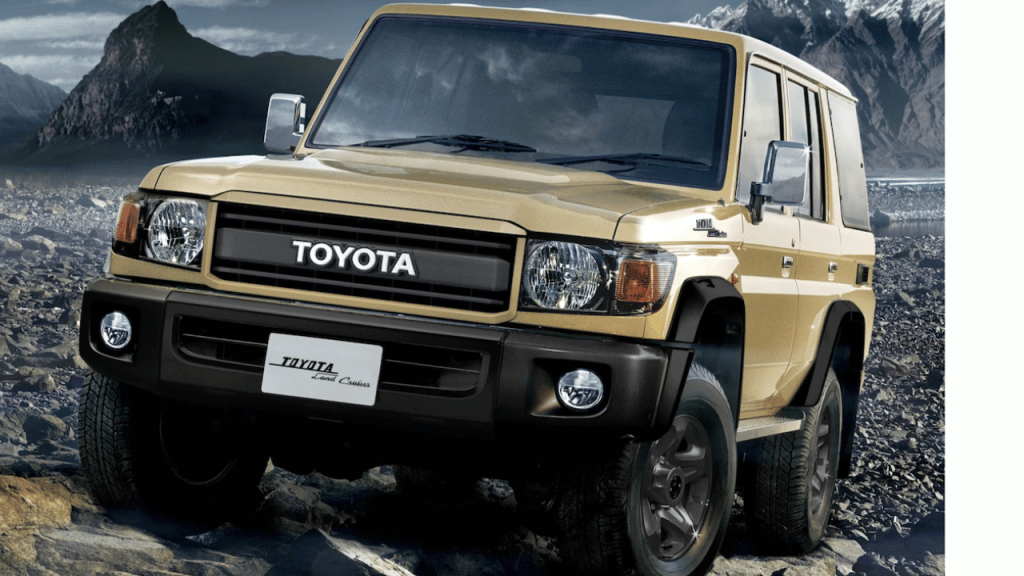
The Fifth Generation Land Cruiser 80 series was introduced at the Tokyo Motor Show in October 1989 and went on sale in early 1990.
It featured swing-out back doors until 1994 when they were replaced by a tailgate and hatch. Because of its spherical shape, was dubbed the Burbuja (Bubble) in Colombia and Venezuela.

6th Generation (J100)
The 100 series Land Cruiser debuted in January 1998 to replace the 8-year-old 80 series. The 100 series was introduced as the “Grand Cruiser” during the 32nd Tokyo Motor Show in October 1997. Under the code name 404T, development began in 1991, with the final design locked in mid-1994.
The Lexus LX 470, which was also available in Japan as the Toyota Cygnus, was based on the 100 series.
Night View, the first international series production active automobile night vision system, was released in 2002 on the Cygnus or Lexus LX470.

7th Generation Land Cruiser 200 Series
Under the leadership of Sadayoshi Koyari and Tetsuya Tada, a 5-year development plan for a successor to the 100-series platform began in 2002.
A final production design for the 2008 J200 was determined in 2004, ten years after the design selection of its predecessor in 1994.
Between 2004 and early 2007, prototype-related tests lasted over two years. Toyota’s new Land Cruiser debuted in late 2007. The base and entire design of the Lexus LX 570 are shared by the 200 Series.
The 200 Series is available in four trim levels: GX, GXL, VX, and Sahara.
In Japan, the Land Cruiser underwent an upgrade in 2009, when it acquired the 4.6 L V8 1UR-FE engine and a 6-speed automated transmission.

7th Generation (J200) Facelift
Toyota introduced an upgraded, facelifted version of the J200 in Japan in August 2015, which was afterward offered internationally.
This model debuted in the United States in 2015 for the 2016 model year. The updated version has a new 8-speed electronically controlled automatic gearbox (ECT-i) connected to the original 5.7 L 3UR-FE V8 petrol engine, bigger front disc brakes, and a higher axle ratio (3.30:1 vs 3.90:1 in the previous year).
The key external features of the facelift were updates to the front fascia, grille, headlights (with daytime running lamps), rear tail lamps, and bumpers. A new multimedia system and interface with bigger screens front and rear, as well as a revised interior style, were among the interior upgrades.

2021 Toyota Land Cruiser LC300
On June 9, 2021, the LC300 series Land Cruiser was launched. Takami Yokoo, Toyota’s top engineer, oversaw its development. The frame, which was built on the body-on-frame GA-F platform, was revised to cut weight and boost stiffness.
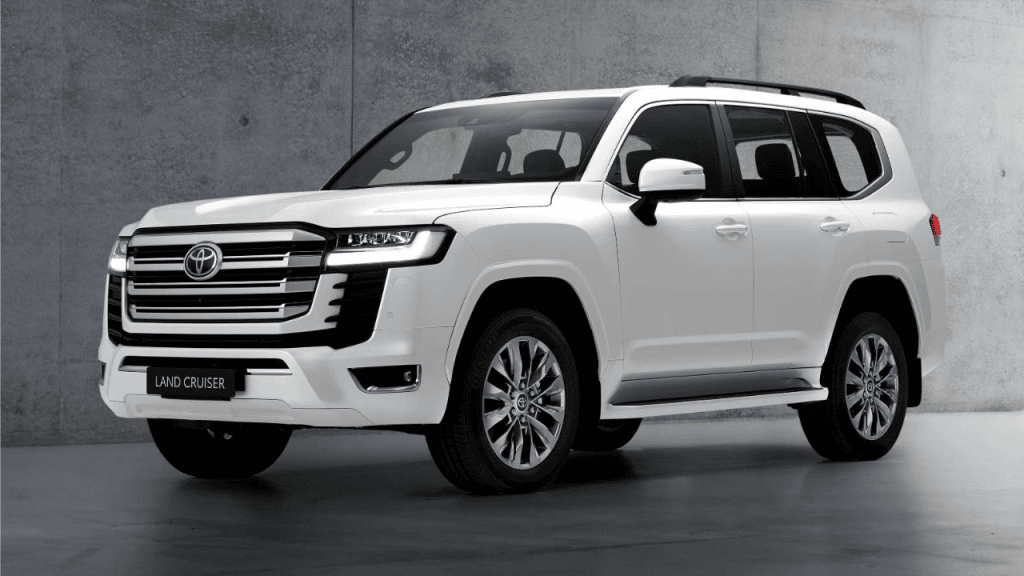
When compared to its predecessor, the vehicle’s total weight was lowered by 200 kg (441 lb). Other stated improvements include a lower center of gravity, better weight distribution, and an enhanced suspension system.
For the first time, a GR Sport/GR-S model is also available. It is 5 mm (0.2 in) shorter than the normal model and incorporates extra body adhesive to improve structural stiffness.
The GR Sport variant additionally has front and rear differential locking, although the basic 300 Series just has central locking.

Land Cruiser Japanese Variants
The Japanese model comes in four 7-seat petrol grades: AX, VX, GR Sport, and ZX, one 5-seat petrol grade: GX, and two 5-seat diesel grades: GR Sport and ZX.
[faq-schema id=”97711″]