
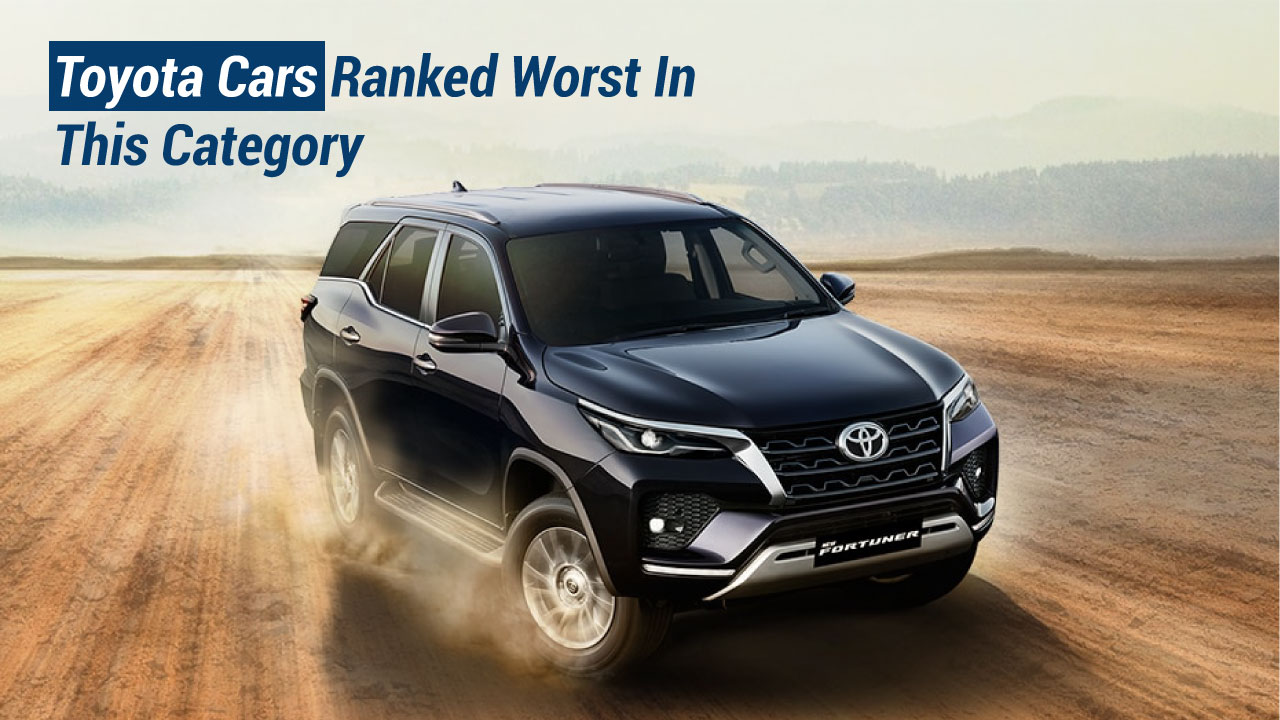
According to a list released Thursday during the COP26 climate meeting in ranking the world’s top vehicle manufacturers Toyota, the world’s largest automaker by sales, came in joint bottom place in a Greenpeace assessment of auto companies’ efforts to reduce carbon emissions. Toyota cars ranked last in Greenpeace’s annual Automotive Environment Guide for 2022 for the second year in a row.
Greenpeace Annual Automotive Environment Report:

The report of the Greenpeace annual automotive environment is based on the manufacturers’ efforts to gradually phase out internal combustion engines (ICE), decrease their use of natural resources, and boost their efficiency. Sales of electric vehicles accounted for more than 5% of the global market in 2021.
The automakers have rated according to the percentage of their overall sales of electric vehicles (EVs) and hydrogen fuel cell vehicles (HFCVs) in the category of switching to zero-emissions vehicles. Toyota delivered the fewest pure electric vehicles (EVs) and hybrid electric vehicles (HEVs) among the top 10 manufacturers in the world, despite being one of the largest corporations by HEV sales volume.
According to the research, 499 out of every 500 Toyota automobiles sold in 2021 have powered by fossil fuels. According to Violette Snow, a Greenpeace Australia Pacific campaigner, although Toyota sells a lot of hybrid vehicles, those vehicles still emit pollutants because they combine an internal combustion engine with an electric motor. Zero-emission vehicles account for 0.2 percent of Toyota’s sales in 2021.
Greenpeace Analysis On Basis of Location:

According to a recent Greenpeace analysis, depending on the locations of their factories, Honda, Toyota, and Nissan have the most risk of experiencing climate change abnormalities out of all the automakers. The Japanese Big Three automakers may face more hurricanes, floods, high temperatures, and water shortages in the future.
In response to the research, all three automakers stated that they are aware of the threat posed by climate change and have set up a disaster-resilient supply chain. However, because of these problems, major automakers are still receiving criticism for their slow rate of EV adaptation.