
Overview
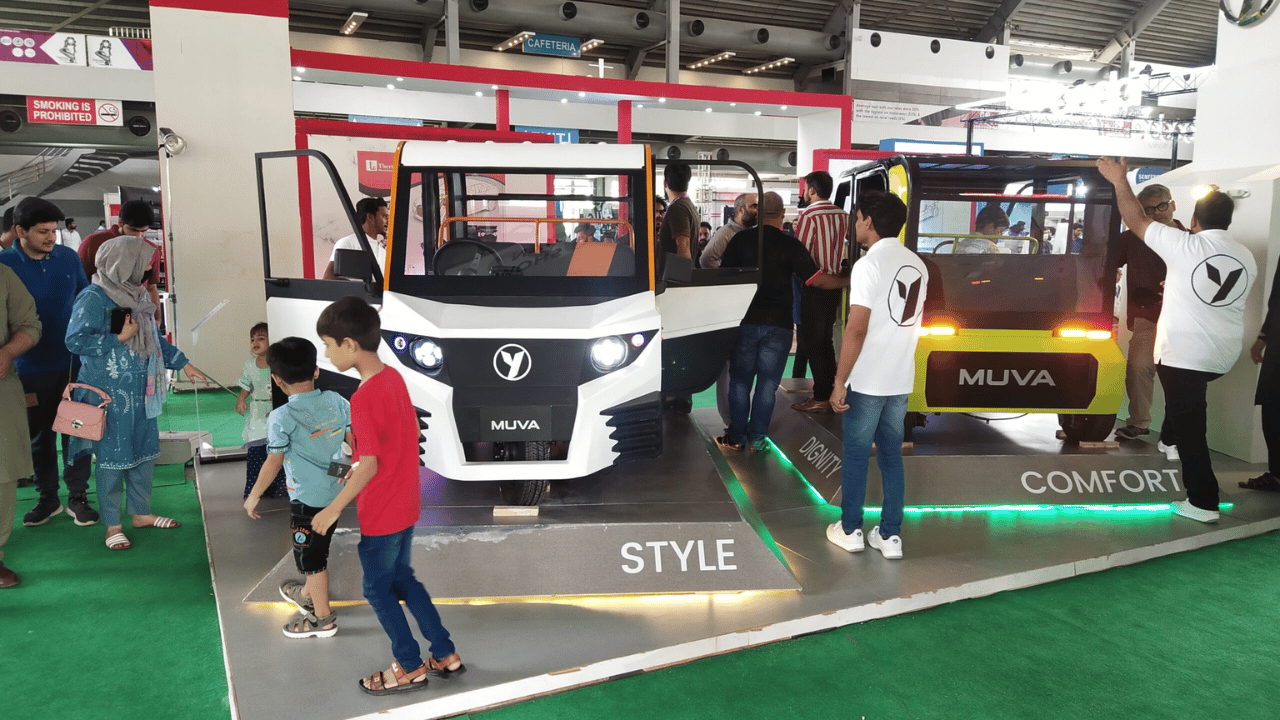
The Muva Electric Rickshaw is a game-changing new mode of public transportation in Pakistan. This innovative mode of transportation is more efficient and cost-effective than traditional gasoline-powered rickshaws since it uses electricity.
The Muva Electric Rickshaw, with its environmentally friendly design, has the potential to change the way people get around in Pakistan.
In this blog article, we will look at the advantages of this new mode of transportation and why it may be a better alternative for public transit in Pakistan.
How Muva Electric Rickshaw works
As we know that automobile technologies are moving towards electric technologies they have manufactured electric bikes, and electric cars now they are going to introduce electric rickshaws.
- Design
- Motor Capacity
- Battery Capacity
- Safety and Drive
- Gadgets
- Cost
Design
Muva Electric Rickshaws, often known as ‘E-rickshaws,’ are three-wheeled electric vehicles with a roof and an open back compartment. They are intended for urban transit that is both convenient and efficient.
Motor Capacity
A 72V DC motor powers the Muva Electric Rickshaw, which can go up to 30 kilometers on a single charge. It also has a peak speed of 45 kilometers per hour. The rickshaw has an innovative regenerative braking mechanism that helps to decrease energy waste and battery life. It also has high power efficiency and low pollution regulations.
Battery Capacity
A 48V lead acid battery and a 72V brushless DC motor with an integrated controller power the rickshaw. To guarantee safety, the controller is set to limit the vehicle’s speed.
Safety and Drive
The rickshaw has various safety measures including a horn, led headlights, and taillights, a steering wheel in place of the handlebar, and its front wheel drive.
Gadgets
It is simple to operate and requires little maintenance with its parts. It also contains a USB connector for charging your phone or other gadgets while traveling.
Cost
Overall, the Muva Electric Rickshaw provides a low-cost, dependable mode of public transportation in Pakistan that is both efficient and safe.
Muva Electric Rickshaw Benefits
Muva electric rickshaws are swiftly gaining popularity as a mode of transportation in Pakistan. They have various advantages over traditional modes of transportation, making them an appealing option for both commuters and visitors.
- No Air Pollution.
- Experience.
- Body Size.
- Can Charge at Home.
- Cheaper Cost.
- Employment Option.
No Air Pollution
One of the most significant benefits of electric rickshaws is that they are environmentally friendly. Electric rickshaws, unlike gasoline-powered vehicles, release no pollutants into the atmosphere, lessening the environmental impact of air pollution.
Experience
Moreover, electric rickshaws are significantly quieter than traditional vehicles, making them a pleasant experience for both riders and bystanders.
Body Size
Electric rickshaws also provide commuters with more ease and flexibility. They can readily enter tiny streets that larger vehicles cannot, making them ideal for congested metropolitan areas.
Can Charge at Home
They also require little to no maintenance and can be charged at home, helping consumers to save money on fuel.
Cheaper Cost
Furthermore, electric rickshaws are incredibly cheap, with rates ranging from 20 to 40 rupees depending on the distance traveled.
Employment Option
Finally, electric rickshaws give employment options for local drivers, which is especially advantageous for individuals in remote regions who do not have access to traditional kinds of work. Electric rickshaws assist to pull people out of poverty and enhance the quality of life in their communities by giving them employment.
Muva Electric Rickshaw Loading Capacity
- The MUVA electric rickshaw, a commercial EV that is extremely light, can carry a driver and three passengers.
- It has a curb weight of 450 kg
- The load capacity of 300 kg.
- It is powered by a single 10.7 horsepower electric permanent magnet motor.
Muva Electric Rickshaw Disadvantage
While Muva electric rickshaws offer many advantages for public transportation in Pakistan, there are also some drawbacks to consider.
- Limited range.
- Valid for short-distance trips.
- Recharge time will not remain the same.
- Cost can be expensive.
- Part availability.
- Safety Features.
Limited range
One of the biggest drawbacks is the limited range of these vehicles.
Valid for short-distance trips
This may be sufficient for short-distance trips within a city. But it can be insufficient for longer-distance trips or those that involve hilly areas.


Recharge time will not remain the same
Additionally, the recharge time is not always ideal while some models allow for quick recharging. Others may require up to eight hours to get back to full capacity.
Cost can be expensive
Another potential drawback is the cost. Electric rickshaws are more expensive than traditional motorbikes or auto rickshaws, and their maintenance costs can also be higher due to their more complicated technology.
Part availability
Additionally, the availability of replacement parts for these vehicles can be limited in certain areas of Pakistan.
Safety Features
Finally, there is a safety concern with electric rickshaws, as they are not equipped with seat belts and have limited protection from the elements. This can be especially dangerous during the hot summers in Pakistan.
Overall, Muva electric rickshaws can be a great option for public transportation in Pakistan, but they do come with certain drawbacks that must be considered before investing in them.
Conclusion
Overall, Muva electric rickshaws have the potential to transform Pakistan’s public transportation system. They are more ecologically friendly, more pleasant for passengers, and substantially less expensive than typical motorized rickshaws.
Although the technology has significant downsides, such as limited battery life and range. The benefits vastly exceed the cons. Muva electric rickshaws might become a cornerstone of Pakistani public transit if suitable policies and infrastructure are in place, reducing traffic jams, pollution, and expenses for users.
[faq-schema id=”97083″]