
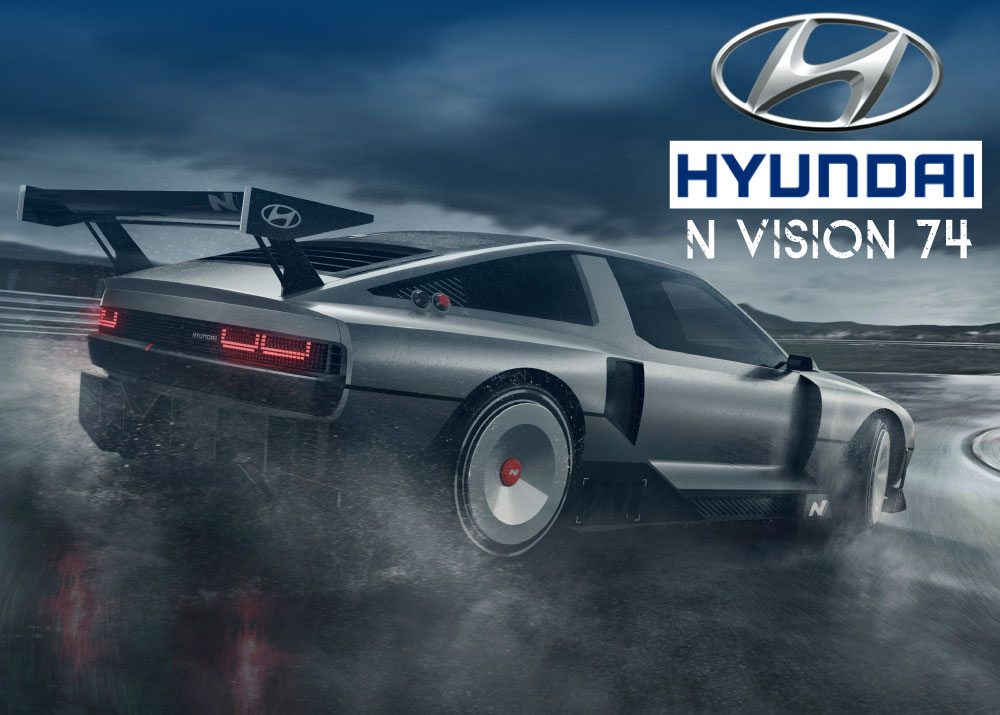
The declaration of carbon neutrality in countries with sizable automobile markets was the catalyst for the current trend toward environmentally friendly vehicles. Hyundai Motor Company is planning to develop high-performance vehicles and hydrogen fuel cell vehicles. At its N Day 2022 presentation in July, Hyundai showcased two intriguing “rolling lab” designs to highlight its vision to become a pioneer in the zero-emissions future. The Hyundai N Vision 74 is one of two ideas. The Hyundai N Vision was the design and legacy of the 74 Legacy Pony Coupe concept Demonstrating advanced technology and providing excellent performance.
Hyundai N Vision Carriedout Design and Heritage of Pony Coupe Concept:
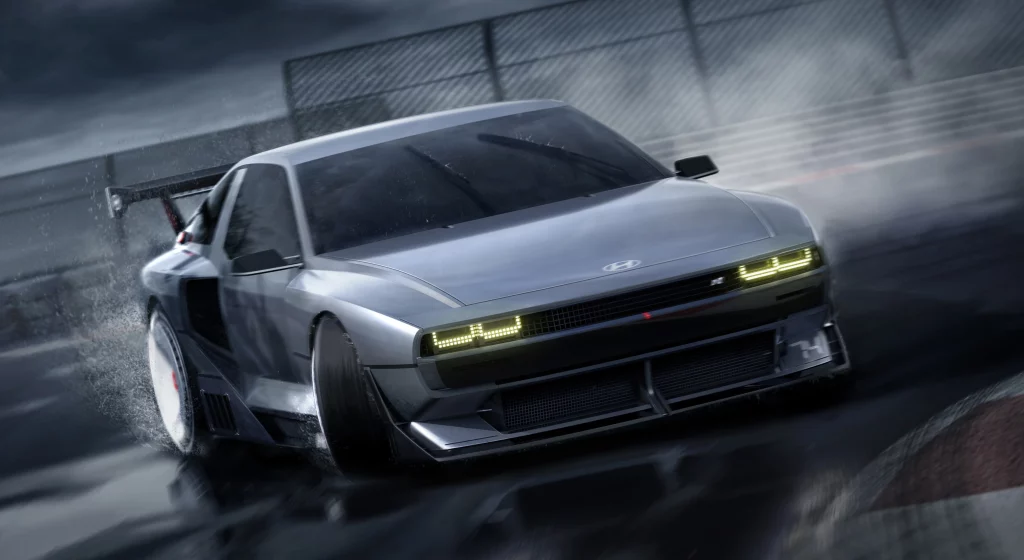
The Hyundai N Vision 74’s design differs from those of earlier Hyundai vehicles, the N brand, or the Rolling Lab line. This demonstrates the style and history of the previous Pony Coupe idea. As a result, the N Vision 74 boasts a classic yet futuristic look. At the Turin Motor Show in October 1974, Hyundai introduced the Pony Coupe concept to the world for the first time, which formed the basis of the N Vision 74 design, one of the best car designers of the time.
Moreover, The Pony Coupe concept features dynamic side silhouette proportions, and the exclusive B‒pillar design that newly inherited to the Hyundai N Vision 74, with motorsport-inspired details added. The front and rear sides are also filled with a futuristic new interpretation of the Pony Coupe concept, like rectangular headlamps and rear lamps, symbols of the PonyCope concept, which are reinterpreted with a parametric pixel design.
Powertrain and Performance:

The Hyundai N Vision 74 comes with a hydrogen fuel cell hybrid system with two tanks under the rear window that holds a total of 4.2 kg of hydrogen and an 85-kW fuel cell stack at the front of the vehicle. Also, The energy generated by the fuel cell stack used to charge the underfloor-mounted 62.4-kWh lithium-ion battery. The N Vision 74 offers a range of 595 km when using a fully charged battery pack and 4.2 kg of hydrogen in the dual rear tanks. Hyundai claims a 0 to 100 km/h sprint time of just under 4 seconds.