
You walk out of your car after a long and hectic day at work, you are ready to go home and relax. Then you discover that you have a flat tyre. While replacing a flat tyre of a vehicle with a spare tyre may seem difficult if you have never done it before. Believe us when we say it’s not that much complicated.
In this blog, we will walk you through everything you need to get back on the road.
Important things that you should know:
Park your car in a safe flat area. Put your vehicle hazards and parking brakes on.
Loosen the lug nuts with the tyre iron in your trunk then raise the wheel of the car in the air with a jack.
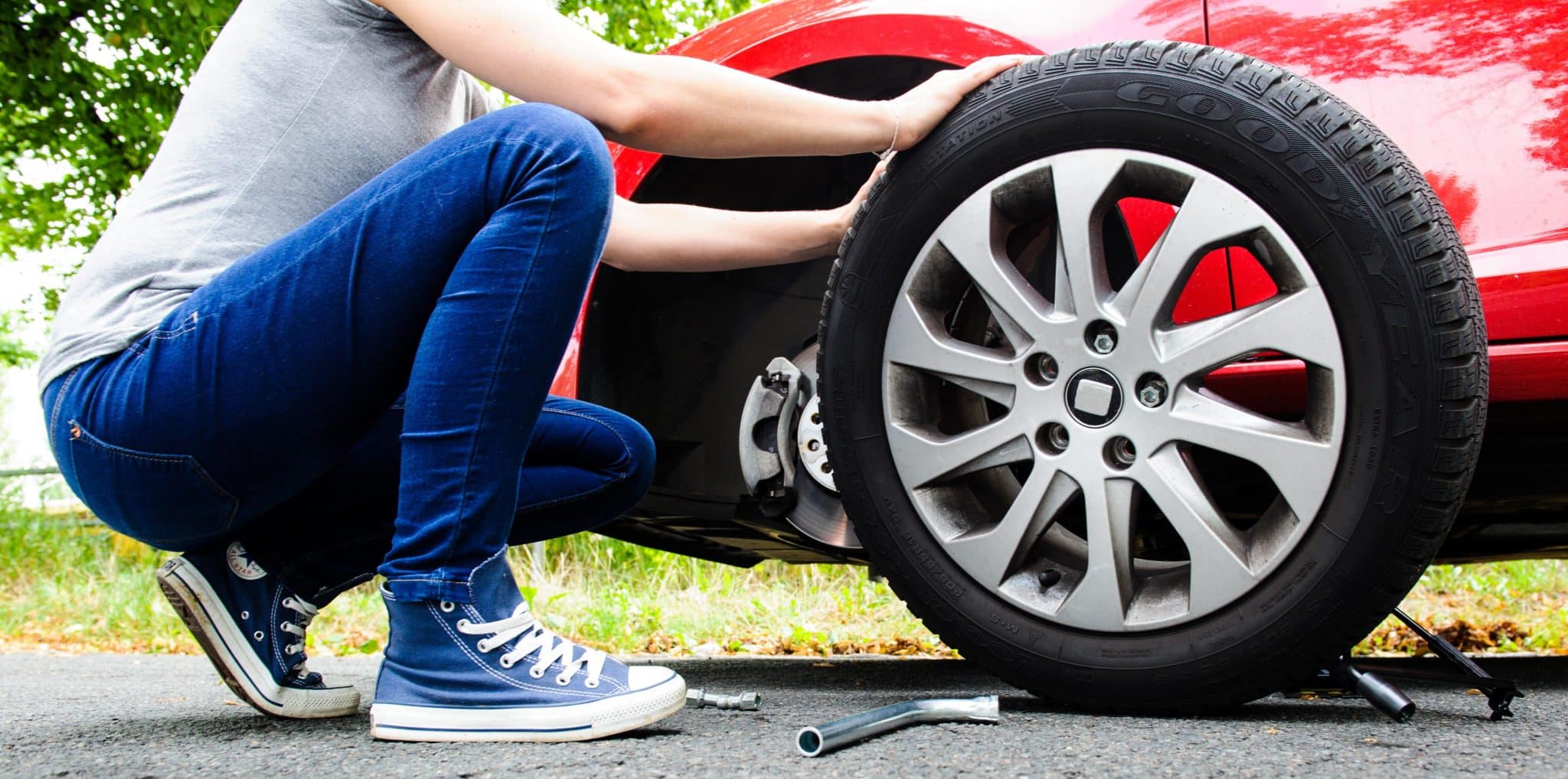
Once the vehicle of your car is in the air, remove the nuts entirely and put the spare on.
Tighten the spare wheel nuts by hand before lowering the vehicle and tightening them.
Following are 10 easy and simple steps to change your car’s flat tyre:
Step 1: Pull over and Put your vehicle hazards on
Find a safe and flat surface where the traffic won’t be at risk. If you are near a road, park as far from the traffic as soon as possible and turn on the emergency hazard lights.
Don’t part your vehicle on an incline to keep your vehicle from rolling away, and stay off of soft grass and soil. Although! If you have to drive a block or two to get to a flat and safe area. Follow these,
Apply the parking brake/hand brake once you have parked your vehicle to ensure that the vehicle doesn’t move.
For added piece of your mind, place some rocks or blocks around each tyre that you aren’t changing to keep the vehicle safe from rolling.
Step 2: Remove the spare tyre and Jack
The spare tyre of the vehicle will be underneath a cover in the trunk. Everyone makes and models will be a little different, but the spare wheel of the vehicle is mostly under the cloth or plastic cover at the bottom of the car’s trunk.
Remove the jack and tyre iron you need to remove the lug nuts.
The Jack is a metal object with a nut and spring. Its purpose is to go underneath your vehicle to push it off of the ground.
In most vehicles, the tyre iron is part of the jack. You will use it to turn the bolt on the end of the jack to raise or lower it, its purpose is also to lose the lug nut of the tyre.
If you drive a jeep or SUV, there are chances that the spare tyre may be on the outside and underneath the vehicle.
Step 3: Loosen your vehicle lug nuts
Remove your vehicle’s hub cap and lose the nuts part-way. Do not remove the lug nut entirely. Just use the end of the tyre iron to loosen the nuts by turning them counterclockwise so that there is no longer any resistance.
Keeping the wheel on the ground when you first loosen vehicle nuts, make sure that you are turning the nuts not the wheel.
The tyre iron may have different sizes of openings on each end. The correct end of the nut will slip easily into it.
However, if your car doesn’t have a hub cap, don’t worry about that part. If so, there might be a center cap on your hub cap that needs to be removed first.


On some new vehicles, you need a special key to unlock one of the lug nuts as a thief prevention strategy.
Step 4: Slide the jack under the vehicle’s frame:
Place the divot in the jack directly under the metal rim of the frame. Get on the ground and use the flashlight on your vehicle to take a closer look. Touch the area directly behind the metal body of your vehicle exterior and look for a thin, metal length.
This is your frame, set the jack underneath the frame right next to the tyre you are going to replace.
Many of the vehicles have molded plastic along the bottom. If you don’t place a jack under a vehicle at the right spot, it will crack the plastic when you start lifting the vehicle. However, if you are not sure about the right place to put a jack on, read the user manual.
There may be a small mark or notch behind the front wheel wells, or in the front side of the rear wheel when the jack needs to be placed.
Step 5: Raise the wheel of the Ground
Use the jack to raise your vehicle tyre 4 to 6 inches off the ground. To start lifting the platform, turn the jack’s handle in a clockwise direction. Once the platform of the jack contacts the vehicle, take a look at the point where the jack meets its frame. If it is not lose the jack and reposition it.
The majority of vehicles have scissors jacks. You use a rod or tyre iron to twist the nut on the side and hoist your car.
This can be kind of freaky the first time you do it. You may think your jack is going to snap and your car is going to tilt over.
It can take a few minutes and elbow grease to get that vehicle up, feel free to take brakes if you need to.
Step 6: Remove the lug nut and tyre
Pop the nut off by hand and pull the flat tyre off. You have already loosened the nut, so removing them should be easy, use the tyre iron and brace the tyre with your non-dominant hand if needed.
With all of the lug nuts removed, slide your busted wheel off the axle.
Put your lug nuts inside your hubcap, which you can now use as a small bowl to prevent losing them.
Step 7: Place the Spare on the vehicle
Line the lug nut bolts up with the opening on the spare wheel and slides the spare onto the axle. The valve system is a little rubber pipe that sticks out where the air is added to the tyre.
It is important to notice that the spare tyre is also known as a “donut”.
Step 8: Replace lug nuts by hand
Don’t tighten the nuts using a tyre iron just yet. Tighten each of the bold by hand to partially lock them in place. You have to tighten the lug nut again once the car is down and there is no risk of falling.
Important: Use the same lug nuts that were on your vehicle previously on your wheel. You don’t need special lug nuts for the spare tyre.
Step 9: Lower your Vehicle
Turn your handle or bolt of the jack anticlockwise to begin lowering the vehicle until the tyre is back on the ground. Then, carefully remove the jack from underneath and put it back in your trunk.
Keep your entire body out from underneath the vehicle. If the jack slips your car will get closer to the ground, and you don’t want your body underneath it.
Step 10: Tight the lug nuts
Tighten the lug nuts until they won’t turn any further using a tyre iron, tighten each nut 3 to 4 times and then move on to the lug on the opposite side. It is important to remind that work in a star pattern to ensure the nuts are secured in an even pattern.
Try to tighten each nut a last time after you’ve already done so to make sure they’re as tight as they can be.
Together with the jack and tyre iron, place your flat tyre in the trunk.
You might also like: Simple And Easy Steps To Clean Car Air Vents