

As the price of gasoline goes up, so does the demand for new hybrid vehicles is increase. The term “hybrid car” refers to a vehicle with multiple powertrains that combines an electric motor with internal combustion petrol or diesel engine which uses energy stored in batteries. A hybrid electric vehicle doesn’t need to be plugged into an outlet to charge the battery because the battery is charged by regenerative braking and by the internal combustion engine. If you are someone looking for the same more improved fuel economy vehicle, read on to know more about how does hybrid car work.
How Does Hybrid Cars Work?

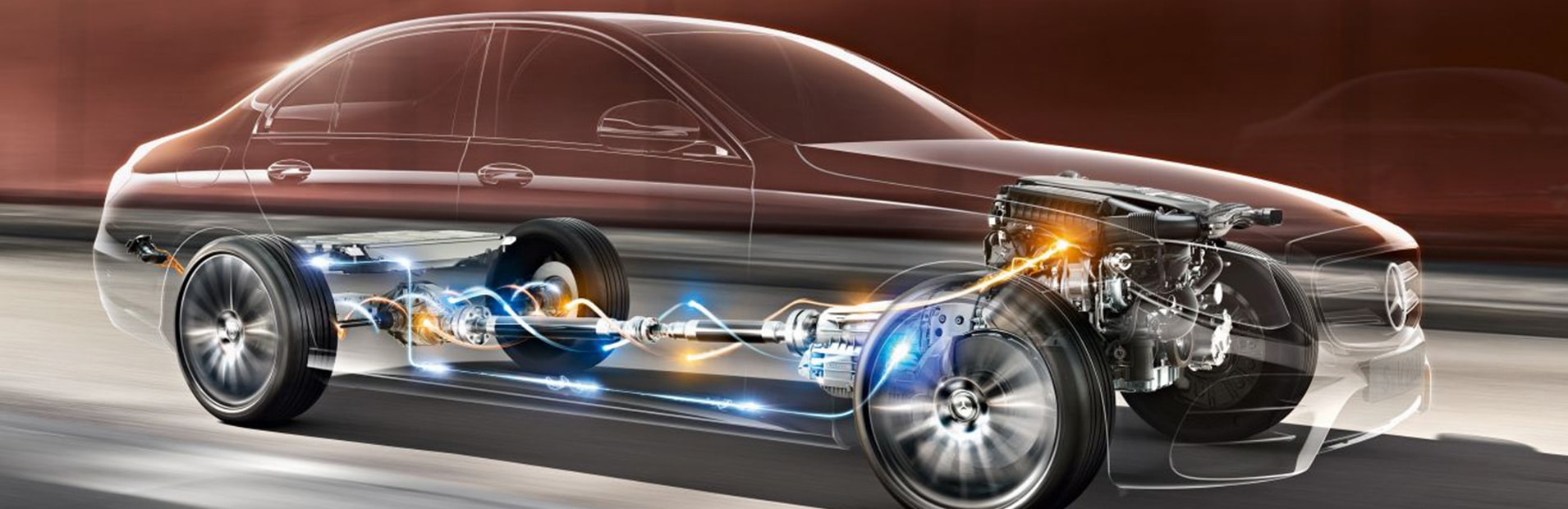
To know how hybrid cars work, you must understand the structure and main components of a Hybrid Electric Vehicle (HEV). Hybrid cars designed to meet different goals, such as better fuel economy or more power. The structure of the hybrid car consists of different components which are as follows:
Auxiliary and Traction battery pack: In the vehicle, the low-voltage auxiliary battery delivers electricity to start the vehicle before activating the traction battery and it also provides power to the vehicle accessories. While the traction battery stores power for use by the electric traction motor.
DC converter: DC converter transforms higher-voltage DC power from the traction battery pack into the lower-voltage DC power required to operate the vehicle’s accessories and recharge the auxiliary battery.
Electric Generator: The electric generator is like an electric motor, but it only works to generate electrical power from the wheels which turn when braking and then transfer this energy to the traction battery. Some vehicles use a motor generator that performs both drive and regenerative functions. It usually used in series hybrids
Electric traction motor: A hybrid vehicle has a highly developed electric motor. It can work as both a generator and a motor thanks to advanced circuitry. It can use the power of the traction battery pack to drive the wheels of the car.
Exhaust system: The exhaust system sends the engine’s exhaust gases out of the tailpipe. The exhaust system has a three-way catalyst to lower engine-out emissions.
Fuel filler and tank:
The fuel metering nozzle from a fuel dispenser attaches to the receptacle on the vehicle tank to fill the fuel tank. The tank stores fuel in the vehicle until the engine needs it.
Internal combustion engine: In the internal combustion (IC) engine, the fuel injected into the combustion chamber or intake manifold, where it mixes with the air and this air-fuel mixture has burned by a spark produced by the spark plug.
Power electronics controller: This component of the hybrid vehicle manages the traction battery’s electrical energy flow and regulates the torque and speed of the traction motor.
Thermal system: It maintains a suitable operating temperature range for power electronics, electric motors, hybrid engines, and all other parts.
Transmission: A hybrid vehicle’s transmission serves the same basic function as a traditional vehicle’s transmission. It converts mechanical power from the engine or electric traction motor to drive the wheels.
Working Principle of Hybrid Car:

The main objective of hybrid car production is to reduce fuel consumption and reduce the rate of emission of harmful gases. Once you have a detailed understanding of the hybrid car the structure and main components, now read about its working principle.
- In the first step, the car engine’s carburetor draws air from the environment and creates a mixture of fuel and air.
- Then, the air-fuel mixture sent towards the compression cylinder of the internal combustion engine which receives this mixture.
- A compression cylinder has a reciprocating piston that compresses the air and fuel mixture. High compression causes the air-fuel mixture to ignite, which generates power.
- After that, the generated power transferred to the generator, which turns it into electricity. The electricity produced by the engine used to charge the car battery or run the motor.
- The battery stores the electricity which is transferred to it. This stored power is used to propel the vehicle when the engine is not running.
How Hybrid Car’s Battery Charged?
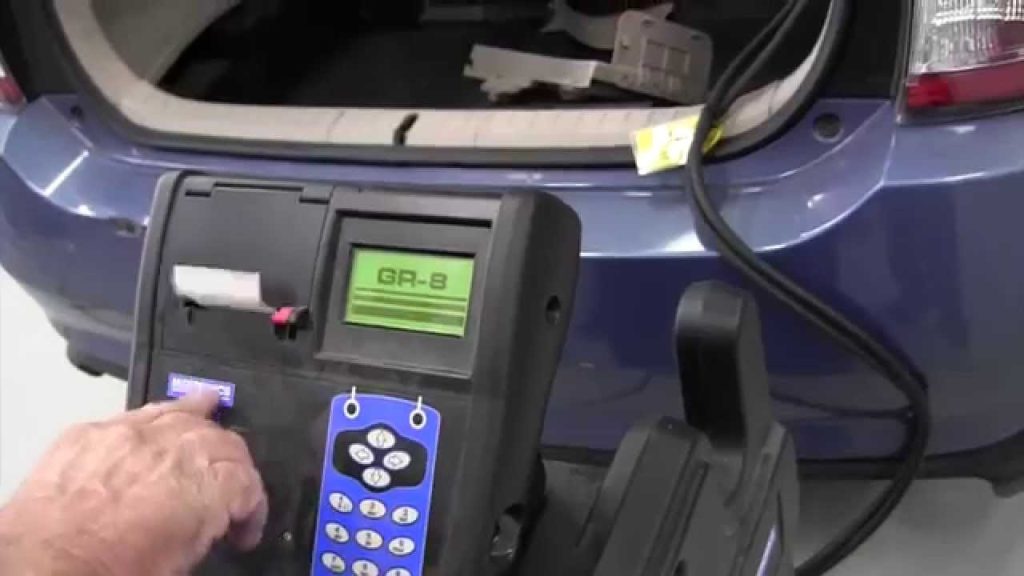
Now that you know how does the hybrid car work, now it’s time to grasp how the hybrid car battery charged. The charging of the Hybrid Vehicle battery depends on the type of hybrid. The majority of vehicles, including plug-in and series hybrids, generate power and charge the battery using a conventional petrol engine. In contrast, the process of battery charging of parallel hybrids is different because they charge the battery by absorbing additional energy and transforming it into electricity.
Working Of Regenerative Braking In Hybrid Cars:
Regenerative braking is a technique for regaining lost energy during braking and storing it as electrical energy in the battery. When the brake is applied to the car, kinetic energy is created. This kinetic energy then used to propel the vehicle ahead. This usually generates heat from the brake pads. The regenerative braking system in hybrid vehicle has the ability to turn this lost heat into power. When you press the accelerator, the battery provides power to drive the motor. As the electric motor receives energy, it moves the wheels of the vehicle.
As soon as you depress the brake or lift your foot off the accelerator, the procedure is reversed. The electric motor’s power is cut off, and the wheels provide it kinetic energy. It effectively converting it into a generator and recharging the battery.
Types Of Hybrid Cars:

Auto manufacturers use a variety of hybrid designs to achieve the highest possible fuel efficiency and keep the cost of the hybrid car as low as possible. There are different types of hybrid cars that have slightly different working systems depending on their construction. The following are the main types of hybrid vehicles:
- Mild-Hybrid
- Full Hybrid
- Parallel Hybrid
- Series Hybrid
- Plug-in Hybrid
Read in detail about the types of hybrid cars.
Do Hybrid Cars Use Gas?
Yes, A hybrid vehicle can’t run without gas, it uses fuel, and you have to fill it up as you filled your conventional petrol vehicle. Because hybrid vehicles combine an internal combustion engine along with an electric motor and battery that require some gasoline to operate.
Hybrid Car Performance:
The gasoline engine in a hybrid car can be significantly smaller and more efficient and provide excellent performance than one in a traditional vehicle. The majority of cars need a relatively large engine to produce enough power to accelerate the car swiftly. However, efficiency can be increased in a small engine by employing smaller, lighter components, lowering the number of cylinders, and running the engine closer to its maximum load.


Hybrid Cars give a good performance as they have more efficient smaller engines because the smaller engine is lighter than the big engine, so the car doesn’t need extra energy to accelerate or drive up a hill and the pistons and other internal components are lighter and don’t need to use more energy when they go up and down in the cylinder.
On the other hand, larger engines usually have more cylinders, and each cylinder uses fuel when the engine fires, even if the vehicle is not moving. This explains why two cars of the same model with different engines can get different mileage. If both vehicles are moving at the same speed, the vehicle with the smaller engine will use less fuel while the vehicle with the heavier engine will use more fuel. Hence prove that hybrid vehicles with small engine are more efficient and perform well.