


An airbag is also known as a supplemental restraint system or supplementary inflatable restraint. The phrase supplementary signifies that the airbag is designed to act in tandem with seat belts to provide additional protection. It plays a vital role in the car’s safety. The main purpose of airbags is to uniformly slow the forward velocity of the passenger in a fraction of a second. In case of a car accident, airbags lessen the probability that your upper body or head will collide with the vehicle’s interior. In this article, we will learn about the safety benefits of airbags and how airbags work.
How effective Are Airbags:
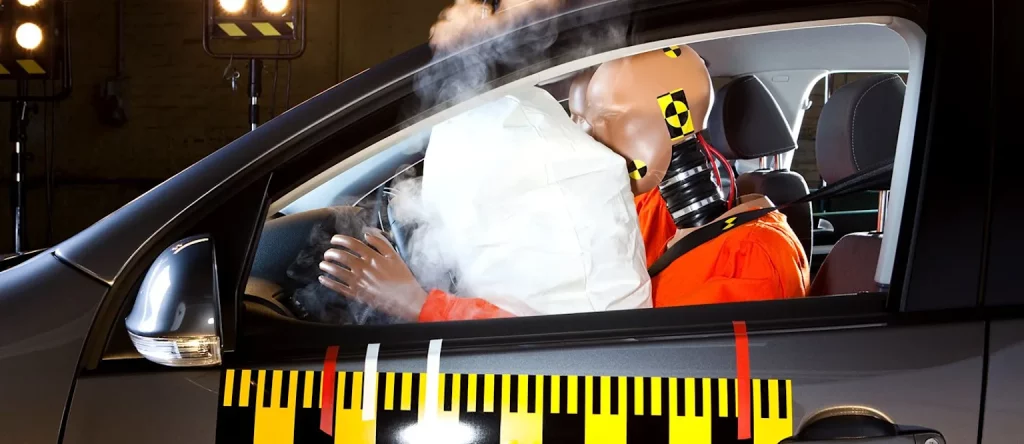
Airbags have become one of the most important safety elements in our cars over the last 20 years. According to US Safety Road Agency (SRA), airbags reduced mortality of death by 16 percent in all crashes as compared to cars equipped just with manual safety belts. The airbags help to reduce the chance of death by roughly 30%. When a medium to a severe collision occurs, the airbag system’s electronic control unit sends a signal to an inflator within the airbag section. the signal in the blink of an eye or less than 20 seconds starts a chemical reaction within the inflator that releases a neutral gas, which pushes up the airbag. As a result, the airbag inflates and prevents you from colliding with the inside of the car.
Parts of Airbags:

An airbag is made up of three parts that work together to achieve this goal.
1.Bag:
The bag is constructed of a lightweight nylon cloth that is folded into the steering wheel, dashboard, or, more commonly, the seat or door.
2. Sensor:
The sensor controls the inflation of the airbag. when a car hit a pole at 10 to 15 miles per hour, then inflation occurs, when a mass shift shuts an electrical contact, a mechanical switch is flipped, alerting the sensors to a crash. An accelerometer embedded inside a microprocessor provides information to the sensors.
3. Inflation system:
The airbag’s inflation system produces nitrogen gas by reacting sodium azide (NaN3) with potassium nitrate (KNO3). The airbag inflates by hot nitrogen blasts.
Airbags Working:

The working process of airbags consists of different mechanisms which are followings;
Accelerometer Sensor:
When a car collides with anything, the speed of the car rapidly decelerates. The change in speed is detected by an accelerometer that is placed in the front of the car. The accelerometer is an electrical device that monitors acceleration or force. The accelerometer activates the airbag circuit if the speed is significantly down because normal braking is insufficient to do this.
Airbag Circuit:
The airbag computer analyses the data from the sensors to assess the severity of the collision. If the airbag circuit deems that airbags are required, it passes an electronic current by a heating element.
Heating Element:
The heating element is just like the wires in the toaster. when the heating element turns on, a chemical explosive ignites. When the explosive detonates, it releases a large volume of harmless gas usually nitrogen or argon gas which is into a nylon bag stored below the steering wheel.
Bag Deployment:
When it receives the deployment orders, the bag swells with gas. The gas inflates nylon airbags at speeds of up to 200 miles per hour. It only takes 1/25 of a second to complete the reaction. It blows the steering wheel’s plastic cover off and inflates the bag to come in front of the driver.
Airbag Deflates:
The driver pushes the bag forward as it moves forward due to the collision. The gas inside the bag escapes through small holes around its edges, and the bag bursts. By the time the car stops, the bag will be completely deflated.
When your head strikes the bag, it will be deflating. Because it absorbs the force. Instead of your head rebounding back off the fully inflated airbag, which might break your neck. A puff of white powder occasionally emerges from the bag. That is cornstarch or talcum powder, which is used in the storage to keep the bag puff and soft.
Types of Airbags:
Airbags come in a variety of sizes and are placed throughout the vehicle. there are four types of airbags Which are as follows:
1. Frontal Airbags:
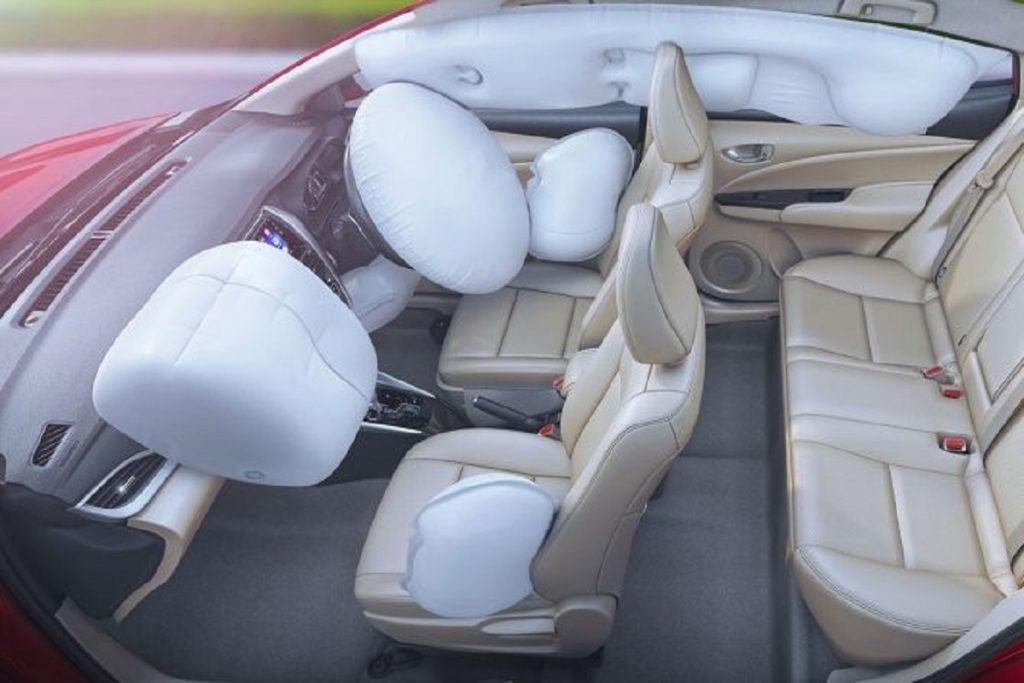
In case of a frontal collision, the front airbags expand from the steering wheel, to save the driver from damaging other sections of the vehicle. Airbags are meant to work in tandem with seatbelts and they do not provide protection in the event of a side-impact collision.
2. Side Airbags:

The side airbags deploy in case of side crashes and possibly in rollovers. These inflate between the door and the seat occupant and are commonly found in the backrest of the seat. In side-impact incidents, side airbags are predicted to lessen significant chest injuries by about 25%. Airbags are divided into two categories. The first is the torso airbag, which protects your torso, and the second is the curtain airbag, which protects your head by deploying from the car ceiling.
3. Knee Airbags:
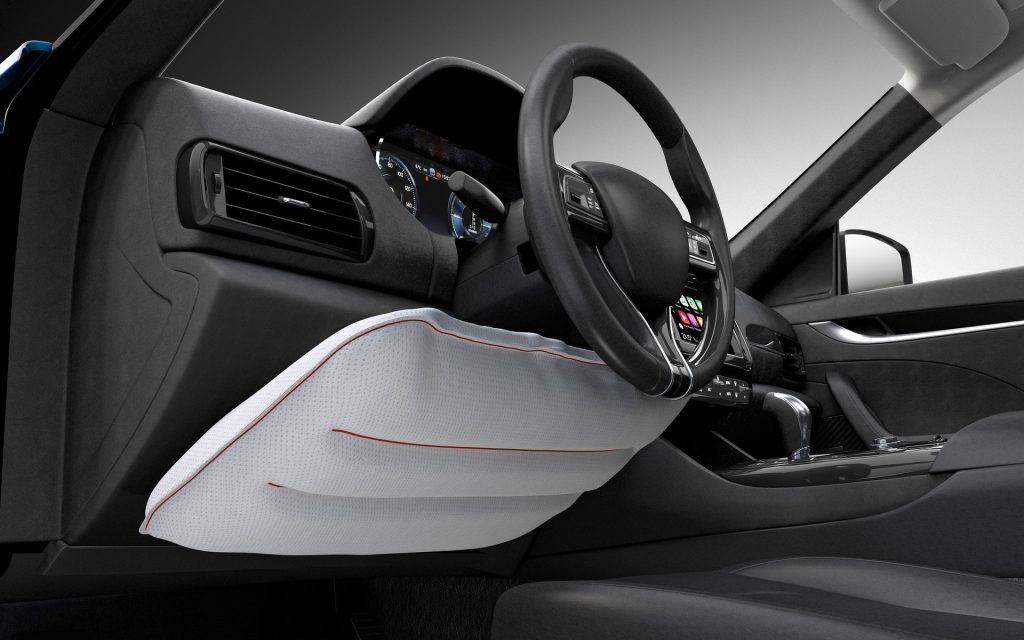
Knee airbags are located just in front of the passenger’s knees in the lower area of the dashboard. They expand to fill the space between both the dashboard and the passenger’s lower thighs in the event of a collision.
4. Inflatable seat belt:

This technology, which works similarly to an airbag, was created to safeguard the fragile bones of rear-seat passengers, such as youngsters and the elderly, who are more susceptible to head, chest, and neck injuries.