
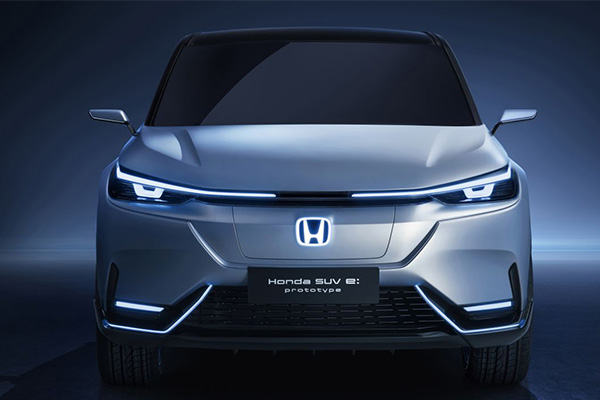
Japanese-based company Honda automaker has unveiled a 10-year plan to reveal electric vehicles this week. Honda will launch 30 electric vehicles worldwide by 2030 ranging from commercial-use mini-electric vehicles to flagship-class cars. It will try to produce an annual output of more than 2 million electric vehicles units by 2030. It plans to spend nearly 8 trillion yen on research and development in the next ten years.
Honda CEO Statement:
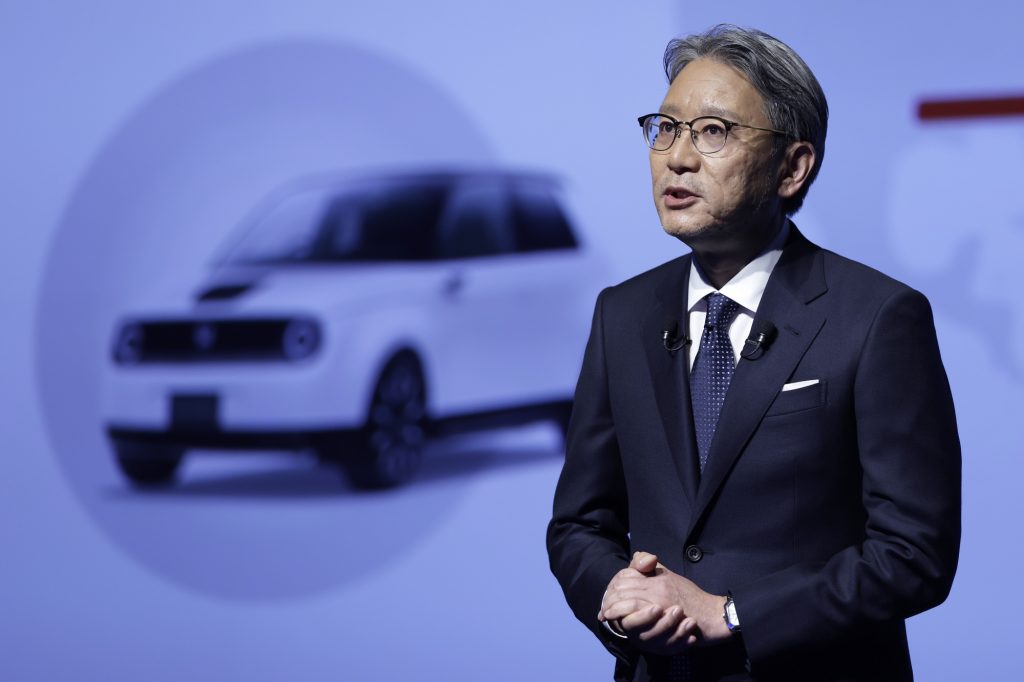
Toshihiro Mibe, CEO of Honda Motor, stated in a press conference at the global headquarters of the company in Tokyo. Honda’s business will transfer away from non-recurring hardware sales and move toward recurring sales of hardware and software services. He also said this will be possible starting from 2026 through the Automaker’s e architecture dedicated EV platform.
CEO also said Honda’s total research and development expenses for this period are expected to be around 8 trillion yen, it will invest approximately 8 trillion yen for this purpose over the next couple of years. It will also spend an additional 10 billion yen per year on startups, which could help the automaker grow its business and shift it from selling products to providing a combined solution.
Honda Electric Vehicles Revealed:

Honda intends to launch a low-cost mini-Electric Vehicle model in Japan by 2024 for commercial use, at a price range of 1 million yen. then it will start introducing personal mini-Electric Vehicles and Electric Vehicle SUVs in Japan.
The company recently announced a joint venture with General Motors to co-develop electric vehicles in North America by 2027 using GM’s Ultium platform, which will cost around $30,000. Honda plans to launch two mid-to-large sizes Electric Vehicles models in North America by this year. These models will be a Honda Prologue SUV and an Acura SUV. Which will be developed in collaboration with General Motors at prices that can be compared to the prices of vehicles with internal combustion engines.
Furthermore, Honda’s CEO reiterated Honda’s previous commitment to introduce ten new in China under the, e: N series by 2027. It is also aiming to launch two electric sports models, a specialty and a flagship model, by the middle of the decade.
Honda e: Architecture Platform:
The Honda e: Architecture is a Honda’s Electric Vehicle platform, which the company plans to launch in 2026. The EV platform will include layers of both hardware and software that will be connected to the cloud. Honda, like many other car manufacturers, observes that software-powered vehicles have the potential to generate recurring revenue through third-party applications. So, it is constructing an application layer on the operating system of the vehicle that can be continuously updated over the air.
Honda will rely on its collaboration with GM to use the Ultimate architecture and EV platform. The automaker plans to complete its architecture by improving the capabilities of its software.
Solid-State Batteries Production:

Honda will take an inter approach to reaching its goal of a gasoline-free lineup by 2030. Honda claims that in the long run, it will develop its own in-house technologies. It plans to construct a demonstration line for the production of all-solid-state batteries, with the goal of beginning demonstration production in late 2024.
To promote its independent battery research and development for solid-state batteries, Honda will invest approximately 43 billion yen. It will construct a demonstration line for the production of all-solid-state batteries. Its aim is to bring lighter and high-energy-dense batteries to market.
Until then, Honda will keep on going to obtain Ultium batteries from GM and look into other joint ventures for battery production in North America. The automaker will collaborate with CATL in China and Envision AESC in Japan to launch a new line of mini electric Vehicles.
Conclusion:

Honda is on track; the company plans to launch 30 electric vehicles by 2030. It has pledged to invest 40 billion dollars over the next 10 years. Honda trying to meet its 10% cost reduction target for global automobile production compared to 2018. Despite the pandemic and the semiconductor shortage, the company claims to have tightened its business structure.