

Overview
Clean your car engine is not a difficult process. With the right tools and a few simple steps, you can quickly and easily polish your car engine. In this blog post, we’ll show you how to effectively was your car engine in 5 simple steps. Convert your car into new condition by just do the simple things for it.
By following the steps outlined in this post, you’ll have your car engine looking as good as new in no time. So grab your supplies and let’s get started on clean your car engine!
1-Park your car on level ground and let it cool down
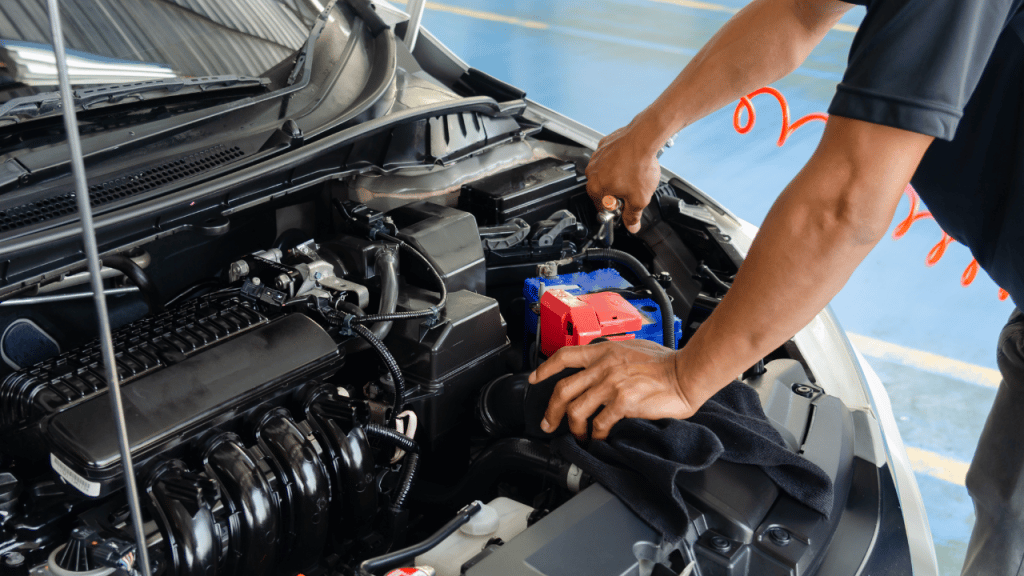
Before you begin to clean your engine, it is important to make sure the engine has cooled down. This will help avoid any burns from the hot engine components. You should also park your car on level ground to help make sure you don’t spill anything on yourself or your car. Once the engine has cooled, then you can proceed to the next step of cleaning your car engine.
2-Cover your air intake with a rag to avoid debris from getting inside
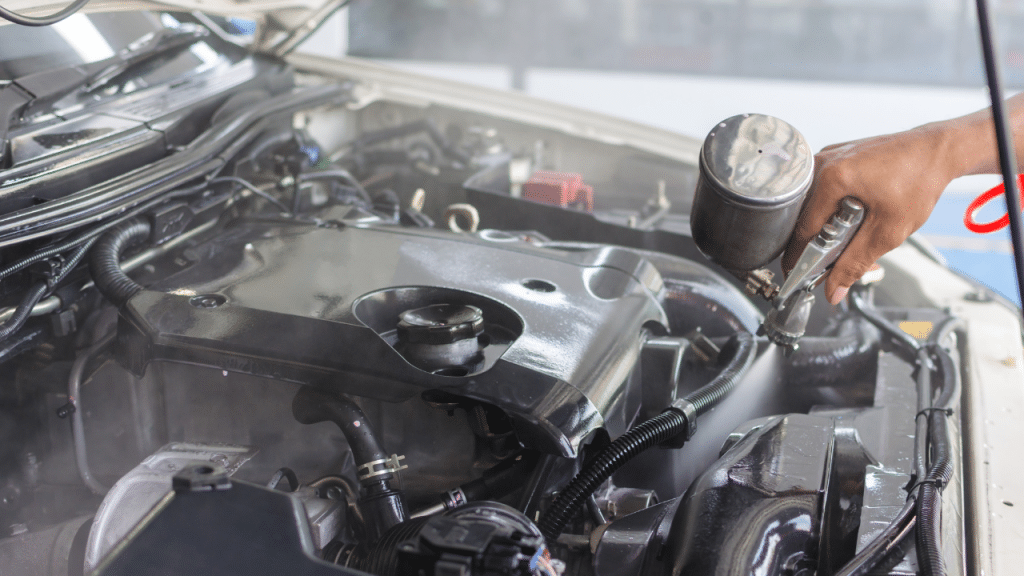
When it comes to cleaning your car engine, the most important step is covering your air intake with a rag. This will help to protect your engine from debris that can get inside and potentially damage it. To cover your air intake, you will need a clean rag or towel that is big enough to completely cover the opening.
Make sure to secure the rag in place with tape or clips so that it doesn’t move around as you’re cleaning. This will help to keep any dirt or debris from entering the engine. If you are unsure where the air intake is, consult your owner’s manual for more information. Taking the time to properly cover your air intake with a rag will help to keep your car engine safe from potential damage.

3-Use a garden hose to wet down the engine
When cleaning a new car or used car engine, it is important to first wet down the engine with a garden hose. Doing this will help to loosen dirt and debris that may have accumulated on the engine. It will also help to reduce the chance of causing any damage while scrubbing with a brush. To begin, position the garden hose close to the engine so that the water can cover the entire surface.
Make sure that the water pressure is not too strong, as it can cause damage to delicate components. Allow the engine to soak for several minutes in order to loosen up dirt and debris. After the engine has been thoroughly soaked, you can move on to the next step.
4-Scrub the engine with a brush
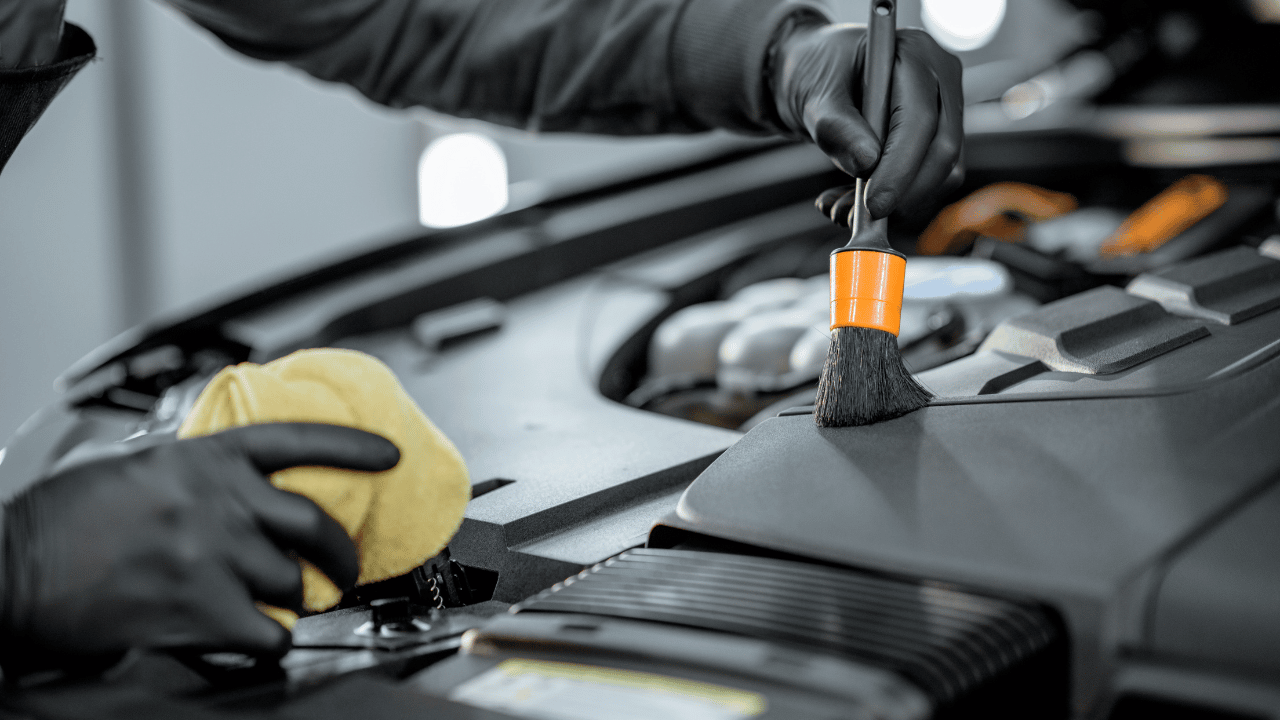
Once you have wet down the engine with the garden hose, it’s time to scrub the engine with a brush. Before you start, be sure to wear protective gloves, as motor oil and other chemicals can cause irritation to the skin. Start with a large, stiff-bristled brush and use it to scrub away at areas such as valve covers, manifolds, and other accessible areas. For hard-to-reach places, you may need a smaller brush.
Focus on one section at a time until the engine is clean. Use a clean cloth to wipe away the dirt and grime as you go. If there are any stubborn spots, you can use an engine degreaser to help loosen them. After you’ve finished scrubbing, rinse the engine with the garden hose to remove all of the dirt and debris.

5-Rinse the engine off with the hose
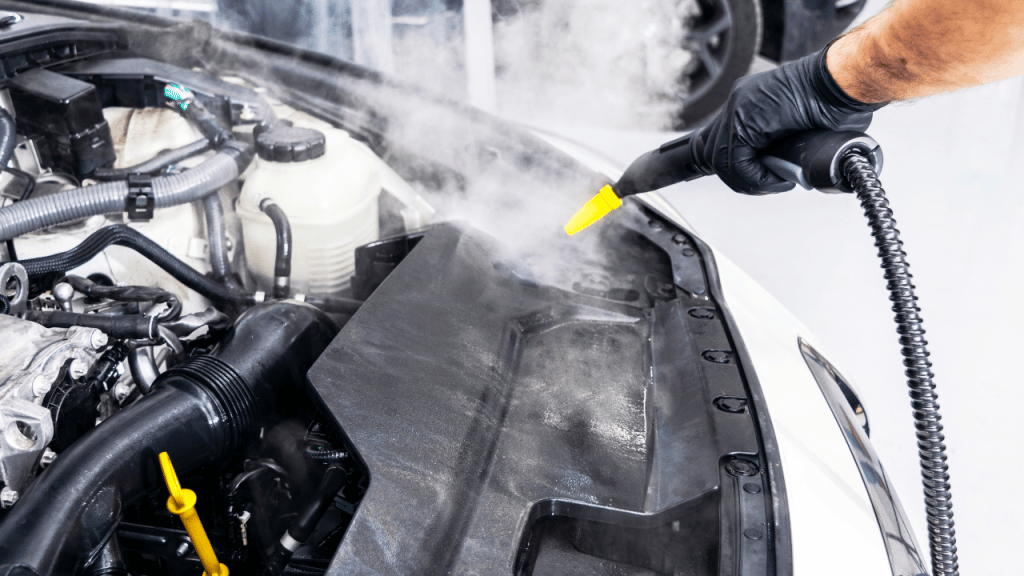
You may use a pressure washer on a low setting, but a normal hose will work. You may also use the sprayer at your local home garage carwash. Rinse the whole compartment, going from back to front, to remove any degreaser. Try not to spray electrical components directly, and avoid spraying too much water into locations that will not dry quickly.
Conclusion
Regular engine cleaning assists in the detection of issues that might damage your vehicle’s performance. You can keep dirt, sludge, oil, and grease from spoiling the condition of your engine. Protection against corrosion. Keeping dirt out of the outlets’ internal pathways.