
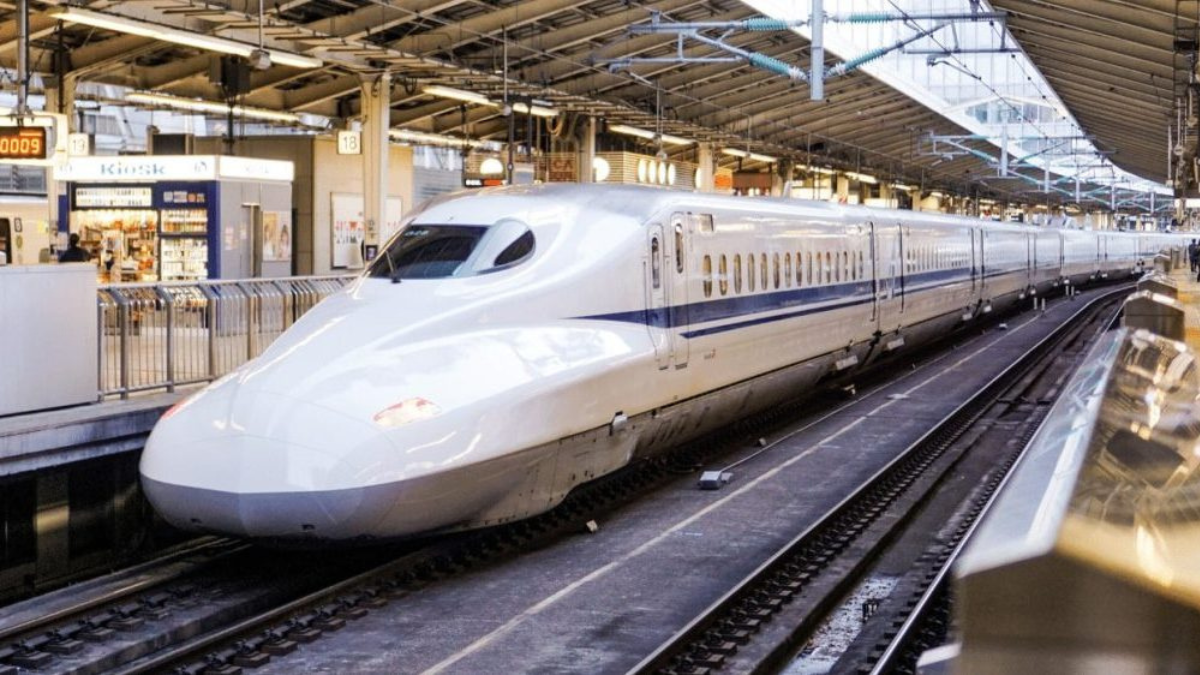
Today we are going to share with you an interesting update, China High Speed Train Technology with 160 km/h Coming Soon To Pakistan. According to the media report, Chinese President Xi Jinping and Pakistani Prime Minister Shehbaz Sharif agreed to start the high-speed rail project at a cost of $9.85 billion in a meeting held in Beijing. As of now, the first batch of train carriages has loaded and will begin shipping on November 3. There are 46 units in the first batch.
China High Speed Train a Project of Strategic Importance:

According to the report, Chinese President Xi Jinping pledged during PM Shehbaz Sharif’s trip to Beijing to support Pakistan’s financial crisis. the two artists agreed to start on Main Line-1 which termed it a “project of strategic importance”. This is also the first time that China has exported high-speed technology to Pakistan. Considering that Pakistan’s railway industry is still using outdated trains from decades ago, this would represent a significant achievement.
The report further states that 184 more carriages will delivered to Pakistan for assembly. The High-speed train project covers a 1,163-mile colonial-era route from Karachi to Peshawar. The project, which has under discussion for years, has approved by Pakistan this week without formally disclosing the source of finance or any other technical information.
More Detail About the High-Speed Train Technology:


More details about these Chinese trains have not been revealed, but we will update you as soon as we get them. Recently, the central Banks of Pakistan and China signed a cooperation agreement to use of the Chinese yuan for cross-border transactions by enterprises and financial institutions in China and Pakistan.
President of China, Xi also suggested that Pakistan and China should work together to carry out the Mainline-1 (ML-1) railway upgrade project and the Karachi Circular Railway project. The project is part of the china Belt and Road Initiative (BRI), which aims to improve China’s road, rail, and marine linkages with the rest of the world.