

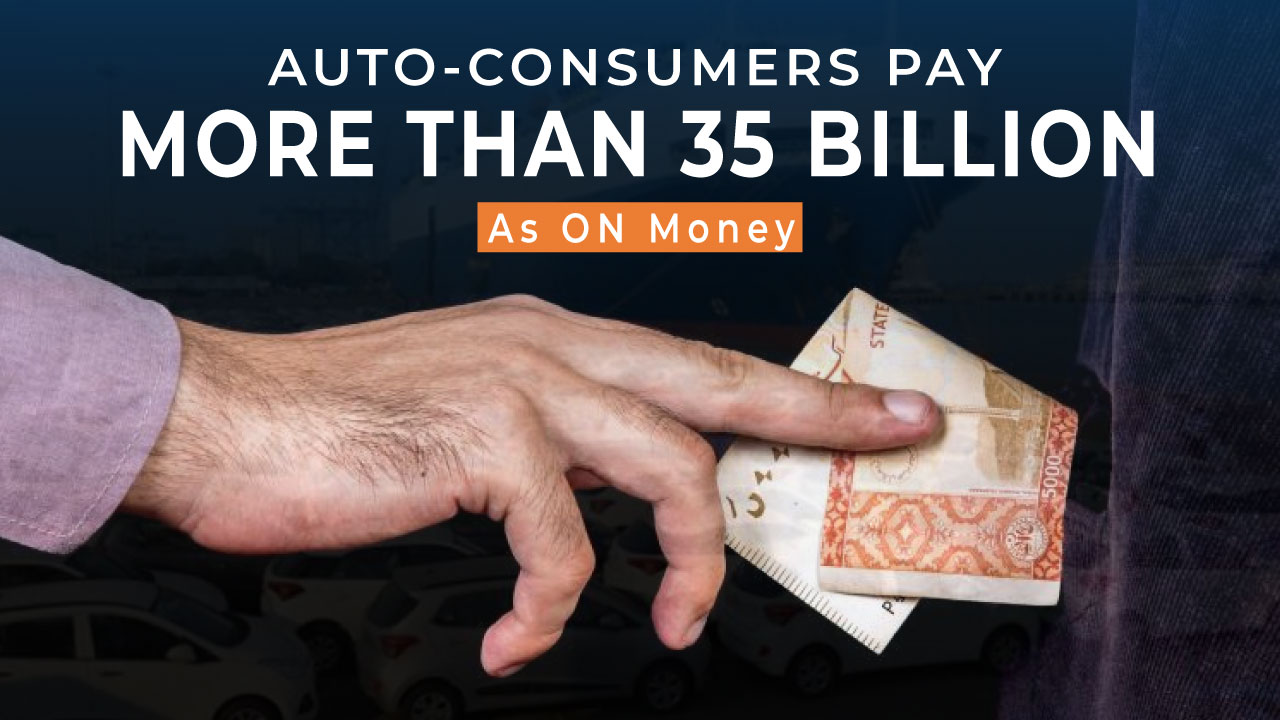
A report shared by the Pakistan Institute of Development Economics (PIDE) exposed shocking information regarding the “ON Money” culture. According to the report, automobile consumers pay more than Rs 35 billion rupees in ON Money yearly, which is astonishing considering Pakistan is an underdeveloped country.
Reasons For The Spread of this ON Money Culture:
ON money a black-market premium collected mainly by automakers, new car dealers, investors, and insider traders The spread of this culture in Pakistan is mostly due to two factors: advanced reservations and a lack of vehicle supply.
How does it ON Money Culture Function?
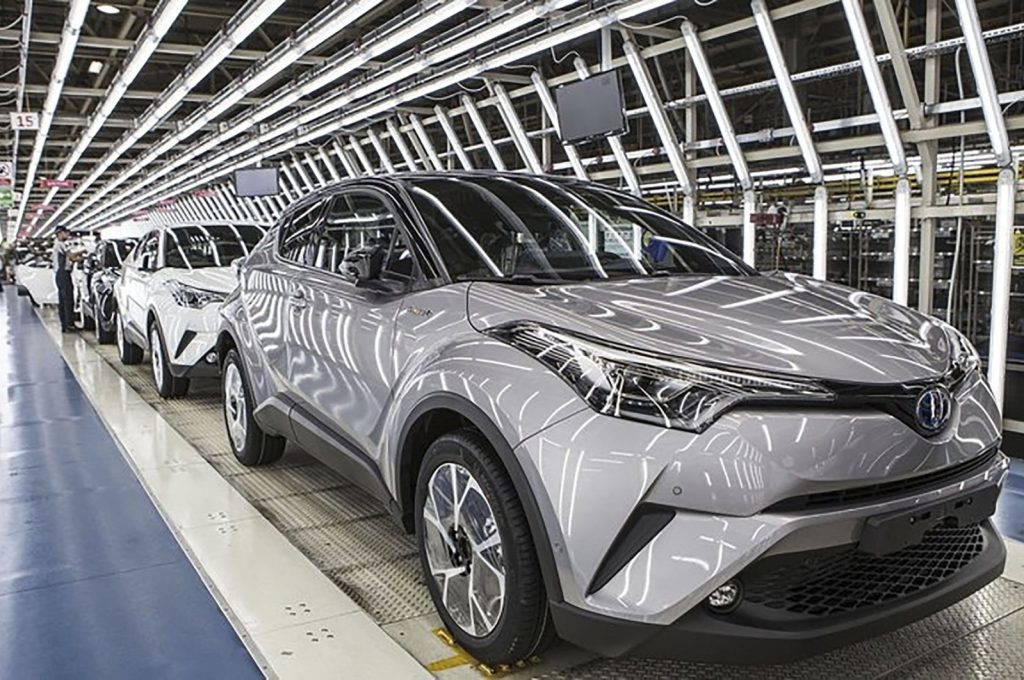
Economic theory predicts that monopolists will supply less than demand, which means they retain spare capacity. In other words, the car companies only manufacture 200,000 units, while they can create 400,000 units a year. This practice maintains a shortage of cars in the local market.
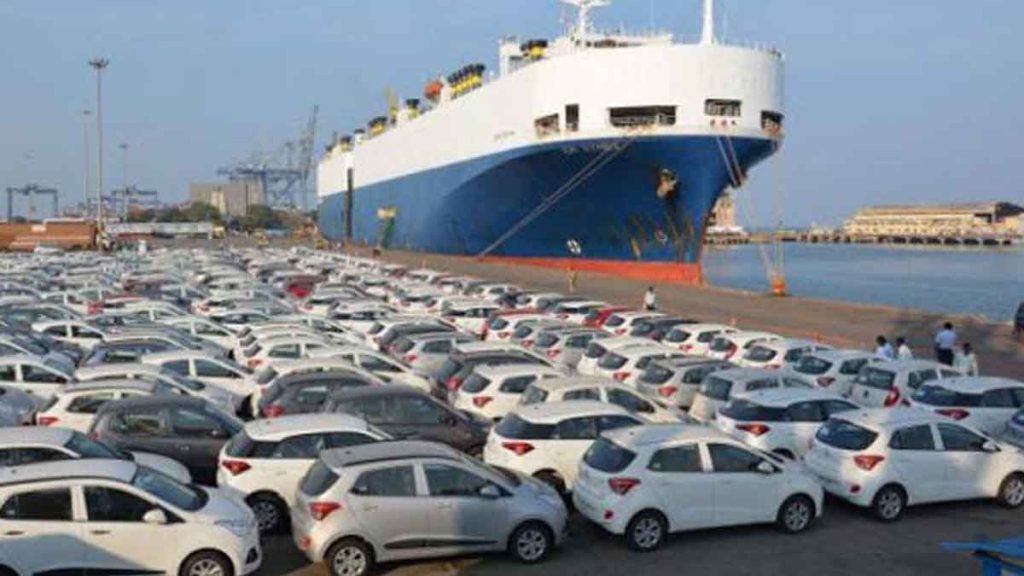
The report also claimed that when the government permits the import of vehicles, even if in a baggage scheme, car companies lobby to limit the number of cars imported so that the market’s surplus demand, yet they fail to increase production. The imported secondhand cars, albeit with a greater duty than the local cars, very well known and rapidly destroy the ON Money.
When the government blocks imports, local companies have a field day. They will not ramp up production but increase bookings. Companies will collect additional orders, resulting in longer wait times for customers, resulting in ON Money risk. As a result, the consumers reserve cars with no guarantee of availability date and price.
ON Money More profitable In Pakistan:

ON Money business is now more profitable than the real estate industry in Pakistan. If the current ON is 5% on a car with an average delivery time of three months, the investor earns more than 22% in a year. Many associates are deeply involved in this business as 600 billion rupees are tied up in the market which indicates how profitable is this business.