

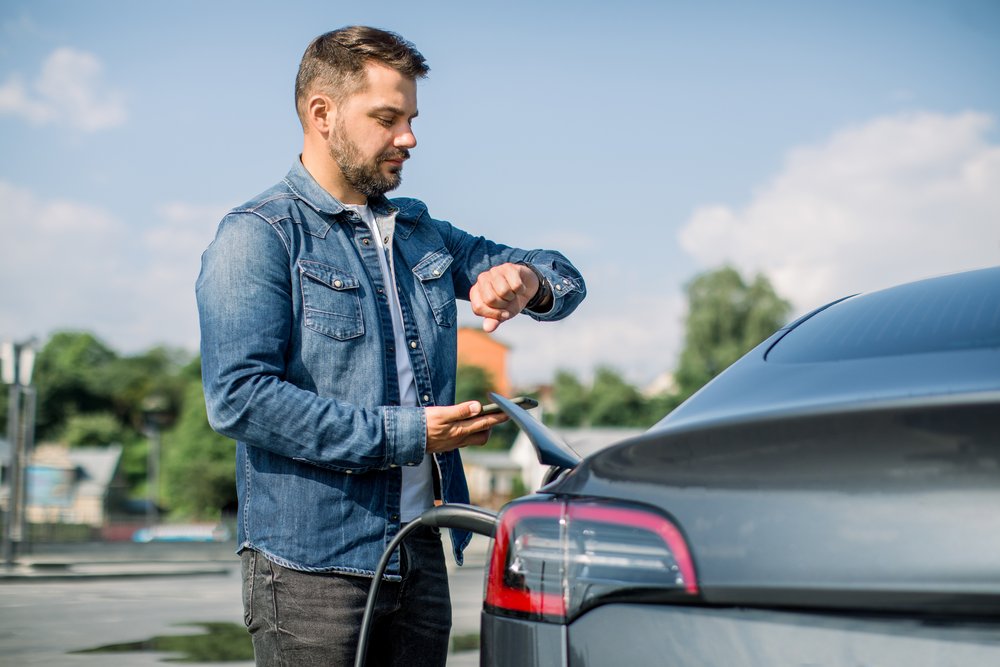
Well, Electric Vehicles (EVs) are rapidly gaining popularity. A large number of people drive an electric car globally and by 2030, This number is expected to reach 140 million. It is difficult to determine the exact amount of time, how long does it take to charge a electric car. The answer to this question is not easy and straightforward. Because there are a number of factors including the charging station and its power output, the charging capacity EV, battery size, and current charge level all play an important role in determining how long does it take to charge electric car. Let’s discuss in detail how long does it take to charge electric cars? And how the various factors affect the charging time and speed.
How Long Does It Take To Charge An Electric Car?
As we told you above it is a difficult task to perfectly calculate how long to charge an electric car because it depends on the battery and the charging point, and it can be done at home or any public charging station. Charging sources can take days or just a few minutes to significantly charge a battery. We can get a good estimate of how long does it take to charge a electric car at different charging levels. Just be aware that your estimate may vary slightly or significantly depending on different variables.
Charging Levels For Electric vehicle (EV):
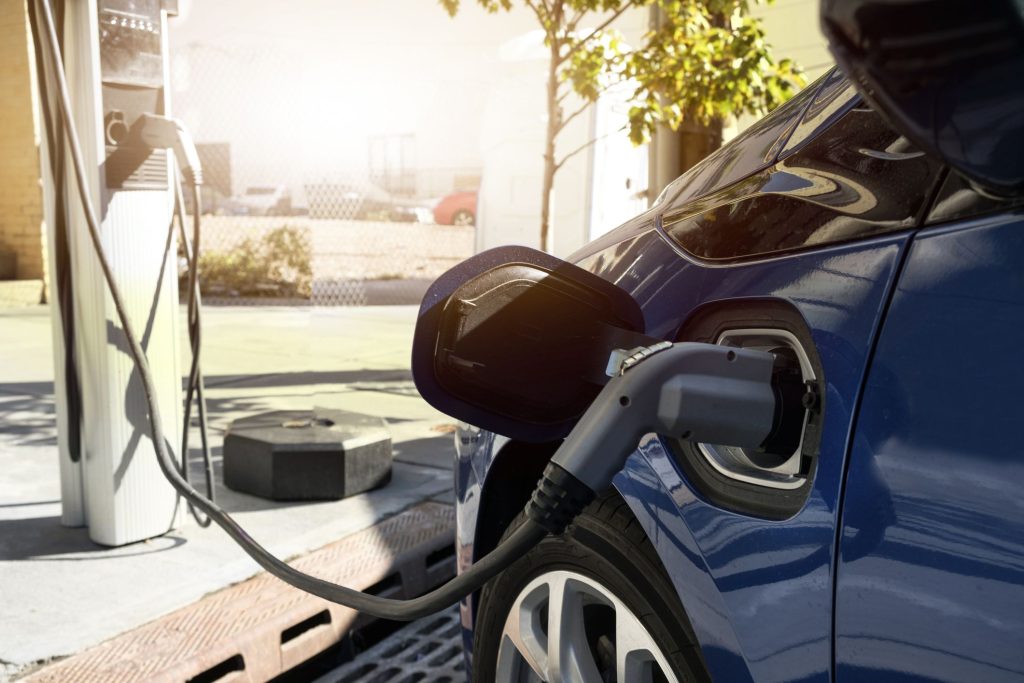
How long to charge electric car completely depends on the charging sources, known as the charging level or charging speed. charging source has a major role in how quickly an EV can charge. Nowadays, there are three charging levels for Electric vehicles (EVs) Level 1, Level 2, and Level 3 or DC Fast Charging which are as follows:
Which Type Of Current Used To Charge An EV?
Electric vehicle batteries store and use direct current (DC). While Level 1 and Level 2 chargers use Alternative current (AC), they use the vehicle’s onboard converter to convert AC to DC. On the other hand, Level 3 charging (DC Fast Charging) sends DC power straight to the battery. This is because the AC to DC conversion occurs outside of the car, inside the charging station. The Level 3 charging referred to as DC or fast charging avoids the time-consuming conversion process and sends current directly to the EV battery.
Level 1 Charging (AC):
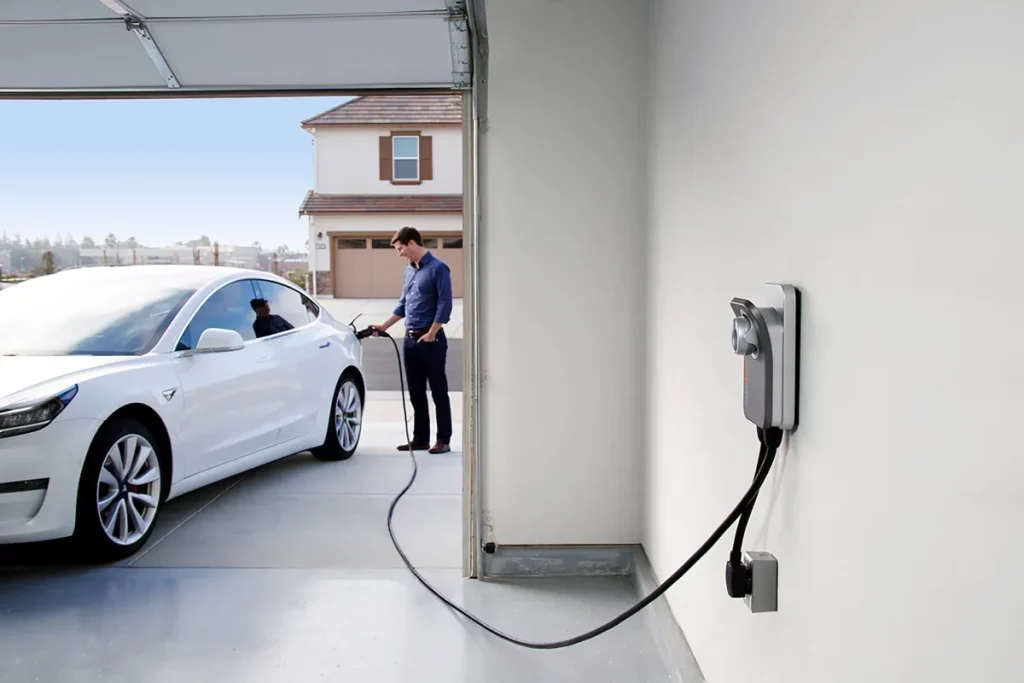
Level 1 charging done when you charge your electric vehicle by plugging it into the standard outlet that comes with your car. One end of this charger can plugged into any standard 120V socket and the other end plugged directly into the vehicle. These domestic socket chargers are the slowest way to charge an electric car and take a long time to fully charge a typical EV battery. It can charge the vehicle 200 km (124 miles) in 20 hours. This type of charger uses AC (alternating current) power but could be good for vehicles with smaller battery packs like plug-in hybrids. you can also use level 2 or 3 chargers to charge your electric car whenever you want.
Level 2 Charging (AC):

Level 2 charging is done through a charging station that is either mounted on a wall, or pole or standing on the ground to charge the Electric Vehicle (EV). These chargers are sold separately from the car, although you can often purchase it at the same time. These chargers have a slightly more complicated setup. A variety of charging options are available with Level 2 chargers. A one-hour charge with the 7.4 kW charger can provides approximately 25 miles of range, the 11-kW charger approximately offers 37 miles of range and the 22-kW charger 75 miles of range.
These chargers have a power output of about 240 volts and can take about 3-8 hours to fully charge an EV battery, which is seven times faster than a Level 1 charger. It also uses AC power and enables faster charging due to its enhanced power output. These chargers are typically located in the home and commercial locations. The majority of Electric Vehicle users rely on Level 2 charging at home, you can also installed it in the home for faster charging. Although can be expensive, but it significantly reduces the hassle of charging an EV at home. The level 2 charger is the most useful because it is the fastest means of charging an Electric Vehicle at home.
Level 3 Charging (DC Fast Charging):

It also known as DCFC or fast charging stations, are much more powerful than level 1 and 2 stations, which means that you can charge an EV much faster with them. Level 3 has a wide range of power output and utilizes direct current (DC) power and can be much more expensive than others charging stations. Therefore, these chargers frequently implemented in short-stop locations like service stations and fleet depots.
The speed of charging stations varies as well, but you may anticipate your battery to reach 80% of its capacity in 30 to 45 minutes. Some Level 3 chargers can recharge an empty battery in just 30 minutes and some are delivers up to 350 kW of power, and in doing so, can charge an EV in about 15 minutes. Level 3 charger or DC Fast Charger also called Tesla Supercharger significantly reduces charging time compared to Level 1 and 2 chargers.
Which Factors Affect The EV Charging Speed?
As above we discussed how long to charge an electric car, let’s take a look at the factors that affect the EV charging speed. There are various factors that affect the charging speed of electric vehicles.
Battery Capacity: Not all EV batteries are the same size. If the vehicle battery capacity is high, it means that the vehicle will take a long time to charge.
Battery level: If the EV battery is empty, it will take enough time to fully charge as compared to if you top up from 50%.
Vehicle charging rate: A vehicle’s battery can only be charged at the highest charge rate that it will tolerate. For instance, if your vehicle’s maximum charge rate is 7 kW, you won’t charge it by using a 22 kW ChargePoint.
Other Environmental Factors: Environmental factors such as temperature, time of day, and required charge capacity also determine how long does it take to charge electric cars. EVs start to charge slower in cold weather (Very low temperatures) on the other side, if it’s hot outside or EV’s battery is warm from the weather, it will charge more rapidly.
How Much Does It Cost To Charge An Electric Car?

Charging an electric vehicle does not cost as much as filling it up with gasoline or diesel. An EV’s efficiency is measured in kilowatt-hours (kWh) per 100 miles. to determine how much does it cost to charge electric car, the cost of electricity (in dollars per kWh) and the efficiency of the vehicle (how much electricity is used to travel 100 miles) should be known.
Cost Of Charging EV At Public Stations:
The charging cost of EVs at public charging stations depends on the network of charging points and their locations. The costs of public charging stations are also different depending on the power rating such as slow, fast, or Rapid. Tesla owners are billed 26p per kilowatt (kilowatt-hour) where possible, according to Tesla. In other areas, they bill per minute. For non-Tesla owners, charging fees vary depending on the network they use. Each Supercharging station has a different per-kWh price; however, it normally costs around $0.25 per kWh.
Cost Of Charging Electric Vehicle At Home:
For the majority of EV owners, home charging is the main charging option. The cost of charging at home depends upon the amount of charging you do, and which type of charger you have. An electric car with a good range of 300 miles would require 75-100 kWh to fully recharge and cost around between $10 to $14. Many EVs owners decide to install a more powerful Level 2 charger for faster charging. This charger can give 20 to 40 miles of range per hour using an improved 240-volt circuit and cost $550.