
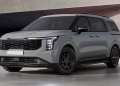
Hyundai considers Europe to be a key market for its Nexo power module auto in light of the fact that the district has further developed plans than other worldwide markets to extend its refueling foundation. The shortage of spots to refuel is a major deterrent to offers of energy component vehicles, similarly as the absence of charging stations is an issue for the across the board selection of full-electric autos. Power device autos have two favorable circumstances over EVs: a more extended driving reach and a considerably shorter refueling time.

The Nexo offers a full-tank driving separation of 800 km (almost 500 miles), as indicated by the NEDC testing administration and 600 km in genuine driving conditions, Hyundai says. That is 200 km longer than its antecedent, the power device form of the Tucson/iX35 SUV. The Nexo can be refueled in five minutes, considerably speedier than it takes to charge an EV’s battery pack.

The Nexo will be a low-volume vehicle, however, it’s a key piece of Hyundai’s push into green autos. It is likewise an innovative grandstand with cutting-edge security gear including an encompass see camera blind side screen, which Hyundai says is an industry, to begin with, and additionally the automaker’s first utilization of auto-directing path keeping help.

Hyundai predicts that the Nexo will offer in significantly bigger numbers than the Tucson/ix35 power device, however, did not give particular numbers, saying just that comprehensively it expects offers of “a few thousand” every year. The automaker considers Germany to be a standout amongst the most encouraging markets on the grounds that an across the nation hydrogen framework venture for power device vehicles expects to have 400 refueling stations in activity by 2025, up from 30 now. France and Switzerland will likewise be fascinating markets, administrators said.

Hyundai says the Nexo defeats cool begin issues that have been an issue with power module autos. The Nexo can begin in 30 seconds at temperatures as low as short 30 degrees Celsius, contrasted and less 4 Celsius for the Tucson, a superior accomplishment than its adversaries, Hyundai says. The energy unit stack’s toughness has been enhanced to 5,000 hours from 800 hours, said Sae Hoon Kim, Hyundai’s head of power device vehicle advancement. This is an indistinguishable level of toughness from a vehicle with an inside ignition motor, Hyundai says. The advances gave the automaker the certainty to offer clients a 10-year guarantee on up to 160,000 km of driving.

The Nexo is based on another committed energy component stage, which gives it more noteworthy power and preferable driving elements over the Tucson/iX35. The yield of the Nexo’s electric engine is 120 kilowatts, (proportionate to 161 hp), up from 100 kW.

Fast facts:
Technology: A camera-based monitoring system beams images of rear and side blind spots to a display in the center console during lane changes. Lane steering assistance automatically adjusts steering to help keep the Nexo centered in its lane. Remote parking assistance can park the Nexo even when there is no one inside.
What’s good: Smooth, quiet ride just like an EV.
What’s bad: One-second time lag to accelerate from a standing start, although a 40-kilowatt battery helps to compensate.
Launch date: Summer (Europe)
Where built: Ulsan, South Korea
Main rivals: Toyota Mirai